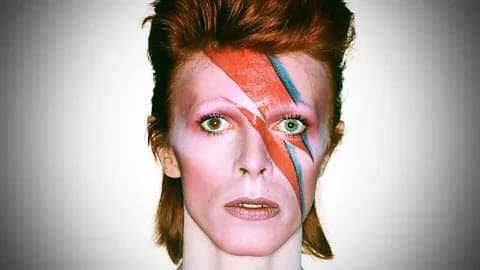
Few artists have left a mark on the music world as profound as David Bowie. Known as the Starman, the Thin White Duke, and the chameleon of rock, Bowie captivated audiences for over five decades with his groundbreaking sound, theatrical personas, and unrelenting creativity. From his early days as a wide-eyed dreamer to his reign as a global icon, Bowie redefined what it meant to be a musician, a performer, and an artist. His music wasn’t just a soundtrack—it was a universe.
In this article, we take an exhilarating journey through Bowie’s legacy by counting down the top 10 most popular songs of all time. These tracks aren’t just fan favorites—they’re anthems that shaped generations, inspired countless artists, and cemented Bowie’s place in the pantheon of legends. From glam rock masterpieces to soulful ballads and experimental art-pop, every song on this list showcases his unparalleled genius and ability to reinvent himself like no other.
Whether you’re a lifelong fan or just discovering his brilliance, prepare to be immersed in the world of Bowie. Let’s dive into the hits that made us dance, dream, and believe in the magic of music. Are you ready to meet the Starman?
1. “Space Oddity” (1969)
“Space Oddity” is more than just a song—it’s an immersive, cinematic experience that introduced the world to David Bowie’s unique brand of storytelling. Released in 1969, just days before the Apollo 11 moon landing, the song taps into the collective fascination and fear surrounding space exploration. It tells the story of Major Tom, a lonely astronaut who ventures into the cosmos only to drift helplessly into the void, never to return.
Musically, “Space Oddity” is a haunting blend of folk, rock, and orchestral elements, with Bowie’s melancholic vocals giving life to the narrative. The song’s structure is dynamic, shifting between eerie calm and dramatic intensity, mirroring Major Tom’s journey from excitement to isolation. The use of the Mellotron—a keyboard instrument known for its eerie, string-like sound—adds an ethereal quality, enhancing the song’s otherworldly feel.
Lyrically, the track captures both the wonder and the loneliness of space travel. Lines like “And the stars look very different today” convey a sense of cosmic beauty, while “Tell my wife I love her very much, she knows” injects a heartbreaking human element into the story. Whether interpreted as a metaphor for fame, detachment, or existential uncertainty, “Space Oddity” remains one of Bowie’s most profound and enduring works.
The song was a breakthrough for Bowie, earning him widespread recognition and setting the stage for his ever-evolving career. It has since become one of his signature tracks, revisited throughout his life in different forms, including the haunting sequel, “Ashes to Ashes.” Even decades later, “Space Oddity” continues to resonate, a timeless exploration of ambition, isolation, and the vast unknown.
2. “Changes” (1971)
Few songs define David Bowie’s legacy quite like “Changes.” Released in 1971 as part of the Hunky Dory album, the track serves as both a reflection on personal evolution and a mission statement for Bowie’s career. With its distinctive jazz-influenced piano riff and introspective lyrics, “Changes” is an anthem for reinvention, urging listeners to embrace transformation rather than fear it.
From the opening piano melody, played by Rick Wakeman of Yes fame, the song has an immediate, almost theatrical feel. Bowie’s vocal delivery is both playful and introspective, shifting between gentle crooning and passionate declarations. The lyrics speak to the inevitability of change, with Bowie famously urging us to “turn and face the strange.” The phrase perfectly captures the essence of his artistic journey—one defined by constant reinvention and the refusal to conform.
Beyond its personal significance for Bowie, “Changes” has taken on a broader cultural meaning. It speaks to anyone standing at a crossroads, facing uncertainty, or feeling the pull of transformation. The song became particularly symbolic after Bowie’s passing in 2016, as fans reflected on his unparalleled ability to adapt and redefine himself over five decades.
Although it wasn’t an immediate hit upon release, “Changes” grew in stature over the years, becoming one of Bowie’s most beloved songs. It has been used in countless films, TV shows, and tributes, serving as a soundtrack for moments of self-discovery and transition. Even today, its message remains as relevant as ever: change is inevitable, so we might as well embrace it.
3. “Heroes” (1977)
“Heroes” is not just a song—it’s an anthem of defiance, love, and hope against all odds. Released in 1977 as part of Bowie’s Berlin Trilogy, this track emerged from one of the most experimental and artistically fertile periods of his career. Written with Brian Eno and recorded at the legendary Hansa Studios, mere meters from the Berlin Wall, “Heroes” captures the tension and longing of a divided world while telling the story of two lovers who meet in secret, dreaming of a better future.
The song’s production is as grand as its theme. Robert Fripp’s soaring, feedback-drenched guitar creates an atmosphere of urgency and passion, while Bowie’s vocal delivery grows more intense as the song builds. Unlike traditional pop structures, “Heroes” escalates dynamically, layering instruments and emotion until it reaches an almost transcendent climax. Bowie’s voice shifts from quiet vulnerability to full-throated desperation, making the listener feel the weight of the moment.
Lyrically, the song’s central figures—lovers clinging to each other by the wall—represent a fleeting but powerful connection in a world that seeks to keep them apart. The repeated refrain, “We can be heroes, just for one day,” acknowledges the temporary nature of their triumph but celebrates its significance nonetheless. It’s a song about courage in the face of adversity, about the power of love and human resilience.
Though it wasn’t an immediate commercial success, “Heroes” has since become one of Bowie’s most iconic songs. It has been performed at historic moments, including Bowie’s 1987 concert near the Berlin Wall, which many credit with inspiring change in the city. Today, it remains a timeless reminder that even in the darkest of times, there is hope.
4. “Life on Mars?” (1971)
“Life on Mars?” is one of David Bowie’s most enigmatic and cinematic masterpieces. Released in 1971 as part of the Hunky Dory album, the song presents a surreal yet deeply emotional commentary on escapism, disillusionment, and the overwhelming nature of modern life. It’s often described as a “Bowie epic,” blending dreamlike imagery with soaring orchestration to create something that feels larger than life.
The song’s origins are rooted in an interesting backstory. Bowie had previously been asked to write an English version of the French song “Comme d’habitude,” but when that project fell through (eventually becoming the basis for “My Way” by Frank Sinatra), Bowie crafted his own response: “Life on Mars?” The lyrics paint the picture of a young girl watching a film, searching for meaning in the world around her. Lines like “It’s a God-awful small affair / To the girl with the mousy hair” evoke a sense of isolation and longing, while the chorus’s dramatic rise transports listeners into a swirling world of abstract but deeply felt emotion.
Musically, the song’s orchestral arrangement, featuring Rick Wakeman’s breathtaking piano performance, elevates it to cinematic heights. Bowie’s vocal delivery, shifting between gentle introspection and operatic grandeur, adds to its theatrical quality. The contrast between mundane reality and the fantastical escape offered by film, music, or even dreams of extraterrestrial life is central to the song’s theme.
Over the decades, “Life on Mars?” has only grown in stature, frequently appearing in movies, TV shows, and tributes to Bowie. It’s a song that invites endless interpretation, capturing both the sadness and wonder of being human. Few tracks manage to be so mysterious yet so universally understood—a testament to Bowie’s genius.
5. “Let’s Dance” (1983)
“Let’s Dance” was more than just a hit—it was a defining moment in David Bowie’s career. Released in 1983 as the title track of his album Let’s Dance, the song marked a dramatic shift in Bowie’s sound, embracing a sleek, radio-friendly pop style that propelled him to new levels of commercial success. Produced by Nile Rodgers of Chic, the track fused Bowie’s artistry with irresistible funk and dance grooves, making it one of the most iconic songs of the decade.
From the moment the song begins, its infectious rhythm commands attention. The combination of Rodgers’ signature guitar work, a driving bassline, and crisp, punchy drums creates an irresistible dance-floor anthem. But what truly sets Let’s Dance apart is its duality—beneath the celebratory surface, there’s a sense of yearning and emotional depth. Lines like “Let’s dance for fear tonight is all” hint at a fleeting moment of escape, a theme Bowie often explored in his work.
One of the song’s most memorable elements is Stevie Ray Vaughan’s scorching lead guitar. His blues-infused solos add a raw, electrifying contrast to the polished dance production, giving the track an edge that makes it unmistakably Bowie. The combination of slick production and gritty musicianship helped Let’s Dance become an international sensation, topping charts worldwide and introducing Bowie to a whole new audience.
Though some longtime fans were surprised by Bowie’s commercial turn, Let’s Dance proved that he could master any genre. The song remains a staple at parties, clubs, and even Bowie’s own live performances, where he often reinterpreted it with different arrangements. Decades later, its infectious groove and underlying complexity continue to make it one of Bowie’s most celebrated songs.
6. “Rebel Rebel” (1974)
“Rebel Rebel” is Bowie’s ultimate glam rock anthem—a swaggering, guitar-driven celebration of individuality and rebellion. Released in 1974 as part of the Diamond Dogs album, the song emerged at the tail end of Bowie’s glam era but remains one of his most enduring and recognizable tracks. With its raw energy, unforgettable riff, and defiant lyrics, Rebel Rebel became a rallying cry for misfits, outcasts, and anyone who refused to conform.
The song’s instantly recognizable guitar riff is one of the most iconic in rock history. Though it sounds like something straight out of a Rolling Stones song, it was entirely crafted by Bowie himself, showcasing his ability to write not just compelling lyrics but also unforgettable melodies. The rough, unpolished sound of the track gives it a raw, almost punk-like energy that stands out in his discography.
Lyrically, Rebel Rebel is a playful but pointed take on gender fluidity and youthful rebellion. With lines like “You’ve got your mother in a whirl / She’s not sure if you’re a boy or a girl”, Bowie taps into themes of identity and self-expression that would later become hallmarks of his career. At a time when rock music was still largely defined by traditional masculinity, Bowie challenged norms, making Rebel Rebel a defining song for those who didn’t fit into neat categories.
Despite being one of Bowie’s last major glam rock songs before his transition into more experimental phases, Rebel Rebel never lost its power. It remains a staple at concerts, a favorite among fans, and a symbol of Bowie’s enduring influence on music and culture. With its infectious riff and fearless attitude, it’s a song that still inspires rebels of all kinds.
7. “Ashes to Ashes” (1980)
“Ashes to Ashes” is one of David Bowie’s most enigmatic and hauntingly beautiful songs. Released in 1980 as the lead single from Scary Monsters (And Super Creeps), it serves as a direct sequel to Space Oddity, revisiting the character of Major Tom—but this time, through a much darker and more introspective lens. While Space Oddity painted Major Tom as a lonely but awe-inspiring astronaut lost in space, Ashes to Ashes portrays him as a fallen hero, struggling with self-destruction and addiction.
Musically, the song is a masterpiece of sonic experimentation. Bowie blends eerie synths, an off-kilter melody, and a hypnotic bassline to create a soundscape that feels both futuristic and unsettling. The song’s structure is complex, moving fluidly between dreamlike verses and a chant-like chorus. Bowie’s vocals shift between detached storytelling and deeply emotional introspection, reinforcing the song’s melancholic atmosphere.
Lyrically, Ashes to Ashes is filled with cryptic imagery and self-reflection. Lines like “We know Major Tom’s a junkie” turn the once-heroic astronaut into a tragic figure, mirroring Bowie’s own struggles with addiction at the time. The song feels like both a farewell to the past and a reckoning with personal demons. It also served as a way for Bowie to metaphorically kill off his earlier personas and prepare for yet another artistic reinvention.
The accompanying music video was just as groundbreaking as the song itself. Featuring surreal visuals, a Pierrot clown costume, and haunting imagery, it set a new standard for music videos in the MTV era. Even decades later, Ashes to Ashes remains one of Bowie’s most captivating and thought-provoking works, a song that encapsulates both his genius and his vulnerability.
8. “Starman” (1972)
Released in 1972 as part of The Rise and Fall of Ziggy Stardust and the Spiders from Mars, “Starman” was the song that introduced the world to Ziggy Stardust, Bowie’s flamboyant and otherworldly rockstar alter ego. More than just a hit single, Starman became a message of hope for outsiders, dreamers, and anyone who felt different. Its themes of cosmic salvation and rebellion against conformity made it an instant classic.
Musically, Starman is both nostalgic and futuristic. The opening verses have a gentle, almost lullaby-like quality, before exploding into the soaring, sing-along chorus. The influence of classic rock ‘n’ roll is evident, particularly in its nods to early rock harmonies and Bowie’s theatrical vocal delivery. The song’s lush orchestration, combined with its uplifting melody, makes it one of the most accessible and joyful tracks in Bowie’s catalog.
Lyrically, Starman tells the story of an alien figure who broadcasts a message of salvation to Earth’s youth, promising that change is coming. Lines like “There’s a Starman waiting in the sky” feel both mysterious and inspiring, suggesting a kind of cosmic revolution. The song’s themes resonated deeply with fans who saw Ziggy Stardust as a symbol of freedom and self-expression.
One of the most legendary performances of Starman took place on Top of the Pops in 1972, where Bowie, clad in a shimmering jumpsuit, confidently put his arm around guitarist Mick Ronson—an act of casual intimacy that was groundbreaking for its time. The performance cemented Bowie as a cultural icon and ignited the glam rock movement.
Decades later, Starman still feels like an anthem for dreamers, offering reassurance that somewhere out there, something extraordinary is waiting.
9. “Fame” (1975)
“Fame” is one of Bowie’s funkiest and most cynical tracks, offering a sharp critique of the music industry and the price of celebrity. Released in 1975 as part of the Young Americans album, the song marked Bowie’s full embrace of funk and soul, a departure from the glam rock sound he had become known for. It also gave him his first number-one hit in the United States, proving his ability to reinvent himself yet again.
Co-written with John Lennon and guitarist Carlos Alomar, Fame is built around a hypnotic, choppy guitar riff and a groove that feels both effortless and urgent. Bowie’s vocals shift between smooth, almost taunting delivery and a distorted, robotic repetition of the word “fame”, creating an unsettling contrast. The song’s minimalistic but tight production makes every element feel precise and intentional.
Lyrically, Fame pulls no punches in its depiction of the dark side of success. Lines like “Fame, it’s not your brain, it’s just the flame” suggest that fame is fleeting, artificial, and ultimately unsatisfying. Given that Bowie was at the height of his own stardom, the song reads as both a personal confession and a broader commentary on the entertainment industry.
Lennon’s influence on the song is particularly evident in its sarcastic tone and the occasional vocal interjections. His presence on the track gave it an extra layer of credibility and helped introduce Bowie to a wider audience.
Despite its biting critique, Fame became one of Bowie’s biggest hits, proving the irony of its message. To this day, it remains one of the best dissections of celebrity culture in rock history.
10. “Modern Love” (1983)
“Modern Love” is one of David Bowie’s most infectious and uplifting songs, a high-energy burst of pure pop-rock brilliance. Released in 1983 as the opening track of Let’s Dance, the song perfectly captures the vibrant, polished sound of Bowie’s early ‘80s reinvention. With its driving beat, gospel-infused backing vocals, and Bowie’s electrifying performance, it remains a fan favorite and a staple of his live shows.
Musically, Modern Love is built on relentless forward momentum. From the pounding drums to the bright, syncopated piano chords, the song never slows down. Nile Rodgers’ production gives it a slick, radio-friendly sound, while the call-and-response backing vocals add an anthemic quality. The song’s energy is impossible to resist, making it one of Bowie’s most danceable tracks.
Lyrically, Modern Love explores themes of love, faith, and disillusionment. Lines like “I catch a paper boy / But things don’t really change” suggest a sense of routine and emptiness, despite the song’s upbeat sound. Bowie sings about the struggle to find meaning in relationships and modern society, making it more than just a feel-good hit.
One of the defining moments for Modern Love came during Bowie’s Serious Moonlight Tour, where it served as the thrilling encore to his concerts. His performances of the song, filled with boundless energy and charisma, cemented it as one of his greatest live anthems.
Even decades later, Modern Love still feels fresh. Whether blasting through speakers at a party or playing over the end credits of a film, its infectious spirit and underlying depth make it one of Bowie’s most enduring tracks.

Edward Tomlin is a frequent contributor to Singers Room. Since 2005, Singersroom has been the voice of R&B around the world. Connect with us via social media below.









