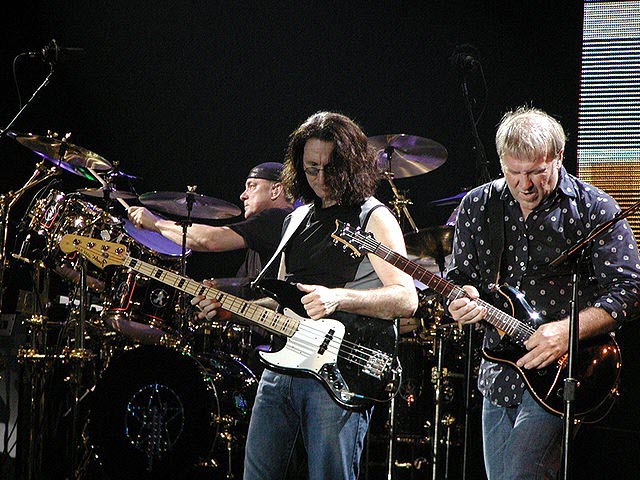
Rush, the legendary Canadian rock trio, has carved an indelible mark on the world of music with their unparalleled blend of progressive rock, technical mastery, and thought-provoking lyrics. Over the course of their four-decade career, Geddy Lee, Alex Lifeson, and Neil Peart pushed the boundaries of rock, fusing complex time signatures with soaring melodies and philosophical themes that challenged listeners to think beyond the ordinary. Whether you’re a lifelong fan or a newcomer to their music, Rush’s catalog is a treasure trove of intricate musicianship and lyrical depth. From their early hard rock anthems to later synth-driven masterpieces, Rush has consistently delivered iconic tracks that resonate across generations. So, it’s no easy feat to narrow down their greatest hits, but in this article, we take on the challenge! Here are the top 10 most popular Rush songs of all time, each a testament to the band’s innovation, creativity, and enduring legacy. Get ready to dive into a journey through some of the most influential and beloved songs in rock history—from arena-shaking anthems to introspective epics, these tracks are sure to remind you why Rush remains one of the most iconic bands in music.
1. Tom Sawyer (1981)
“Tom Sawyer,” released in 1981 on Rush’s Moving Pictures, is often regarded as the band’s signature song. A masterful fusion of progressive rock and synthesizer-driven melodies, this track captures the rebellious essence of a character who “knows what he wants.” Geddy Lee’s distinctive, high-pitched vocals breathe life into Neil Peart’s thought-provoking lyrics, delivering them with intensity and emotion. Alex Lifeson’s guitar seamlessly blends intricate riffs with atmospheric textures, creating a powerful sonic backdrop. But it’s Neil Peart’s legendary drumming that truly steals the spotlight, with complex rhythms that have inspired air-drummers and musicians for decades. More than just a fan favorite, “Tom Sawyer” became an anthem of individuality, transcending Rush’s core following to become a staple in both rock radio and live performances, resonating with generations of listeners.
2. The Spirit of Radio (1980)
First released in 1980 on Permanent Waves, “The Spirit of Radio” is Rush’s tribute to the magic of music and the connection that radio once forged between artists and listeners. The song opens with Alex Lifeson’s infectious guitar riff, immediately setting a lively, upbeat tone. Neil Peart’s lyrics, sharp as ever, reflect on the commercialization of music while celebrating its power to inspire and unite. Geddy Lee’s vocals shift between soaring highs and playful energy, perfectly complementing the dynamic nature of the song. The unexpected reggae-inspired outro is a bold, genre-blending move that showcases Rush’s willingness to push musical boundaries. “The Spirit of Radio” became one of the band’s most beloved hits, capturing their core values of musical integrity and innovation while celebrating the joy of sound.
3. Closer to the Heart (1977)
From Rush’s 1977 album A Farewell to Kings, “Closer to the Heart” remains one of the band’s most cherished tracks, appealing to both casual listeners and dedicated fans. It begins with a gentle acoustic guitar riff but soon builds into a powerful anthem centered on themes of compassion, unity, and change. Neil Peart’s lyrics urge listeners to take action, to “forge a new reality,” and create a better world. Alex Lifeson’s emotional guitar solo enhances the song’s depth, while Geddy Lee’s sincere and heartfelt vocals lend a poignant touch. As a live performance staple, “Closer to the Heart” often features extended instrumental sections, highlighting the band’s musicianship. It’s a timeless piece that continues to inspire with its message of hope and togetherness.
4. Limelight (1981)
Another standout from Moving Pictures (1981), “Limelight” explores the complexities of fame and the emotional toll it takes. Neil Peart’s reflective lyrics speak from personal experience, portraying the struggle to balance public attention with personal privacy. The melodic structure is instantly memorable, with Alex Lifeson delivering one of his most celebrated guitar solos, full of emotion and finesse. Geddy Lee’s vocals convey vulnerability and introspection, making the song feel deeply personal. “Limelight” became a key part of Rush’s live repertoire, connecting with anyone grappling with the pressures of living in the spotlight, whether as a public figure or in everyday life. It remains a powerful anthem of self-awareness and resilience.
5. 2112 (Overture/Temples of Syrinx) (1976)
Rush’s 1976 album 2112 features one of their most ambitious and influential tracks, “2112,” a progressive rock epic that unfolds in multiple sections. The “Overture” and “Temples of Syrinx” segments are particularly iconic, showcasing the band’s ability to fuse narrative-driven concepts with virtuosic musicianship. Set in a dystopian future where creativity is suppressed, the song tells a story of rebellion and artistic freedom. Alex Lifeson’s explosive guitar work, Neil Peart’s relentless drumming, and Geddy Lee’s impassioned vocals create a sense of urgency that propels the tale forward. “2112” is a milestone in Rush’s career, cementing their reputation as pioneers of concept-driven, progressive rock.
6. Subdivisions (1982)
Rush delved into themes of alienation and societal pressure with “Subdivisions,” a track from their 1982 album Signals. Opening with a haunting synthesizer riff, the song sets a somber mood that mirrors Neil Peart’s introspective lyrics about suburban conformity and the isolation that comes with it. Geddy Lee’s bittersweet vocals convey the pain of feeling out of place, while Alex Lifeson’s understated guitar work adds emotional depth. The song struck a chord with listeners, particularly those navigating the challenges of adolescence. “Subdivisions” also marked a shift in Rush’s sound, leaning more heavily into synthesizers while maintaining their lyrical and musical complexity. It remains a poignant exploration of the struggle to find one’s identity in a world full of expectations.
7. Fly by Night (1975)
“Fly by Night,” from Rush’s 1975 album of the same name, signaled a turning point for the band as they began to embrace more complex songwriting. It was also the first album to feature drummer and lyricist Neil Peart, whose influence was immediately felt. The song itself is an optimistic anthem about embarking on a new adventure and leaving the past behind. Geddy Lee’s soaring vocals, combined with Alex Lifeson’s bright and jangling guitar work, give the song an uplifting, spirited feel. “Fly by Night” is a perfect representation of Rush’s early sound, blending hard rock energy with thoughtful, introspective lyrics—a sign of the greatness that was yet to come.
8. YYZ (1981)
Instrumentals rarely capture mainstream attention, but “YYZ” from Moving Pictures (1981) is an extraordinary exception. Named after the airport code for Toronto’s Pearson International Airport, the song opens with a Morse code rhythm spelling out “YYZ.” From there, it takes off into a dazzling display of technical brilliance, with Geddy Lee’s intricate bass lines, Neil Peart’s complex drumming, and Alex Lifeson’s guitar work all coming together in perfect harmony. Each band member shines, contributing to the song’s relentless energy and precision. “YYZ” has become a fan favorite and a Rush concert staple, often receiving cheers the moment the opening rhythm kicks in. It’s a testament to the band’s unmatched musical prowess.
9. Freewill (1980)
“Freewill,” from Rush’s 1980 album Permanent Waves, is a philosophical masterpiece that explores the concept of choice and personal responsibility. Neil Peart’s lyrics challenge listeners to take control of their destinies, emphasizing the power of individual decision-making. The music is equally assertive, with Geddy Lee’s aggressive basslines and Alex Lifeson’s sharp, angular guitar riffs propelling the song forward. The instrumental break is particularly notable, showcasing each member’s technical skill. “Freewill” is quintessential Rush: thought-provoking, musically complex, and emotionally resonant, making it a lasting favorite among fans and a staple in the band’s impressive catalog.
10. Red Barchetta (1981)
“Red Barchetta,” another standout from Moving Pictures (1981), is one of Rush’s most vivid and cinematic songs. The lyrics, written by Neil Peart, tell the story of a future where driving is illegal, and the protagonist escapes to experience the freedom of the open road in a vintage red Barchetta sports car. Alex Lifeson’s energetic guitar work mirrors the excitement of the ride, while Geddy Lee’s vocals bring the story to life. The song’s narrative is rich with imagery, creating a sense of adventure and rebellion. “Red Barchetta” is beloved for its storytelling and musicianship, remaining a fan favorite for decades.

Samuel Moore is a frequent contributor to Singers Room. Since 2005, Singersroom has been the voice of R&B around the world. Connect with us via social media below.









