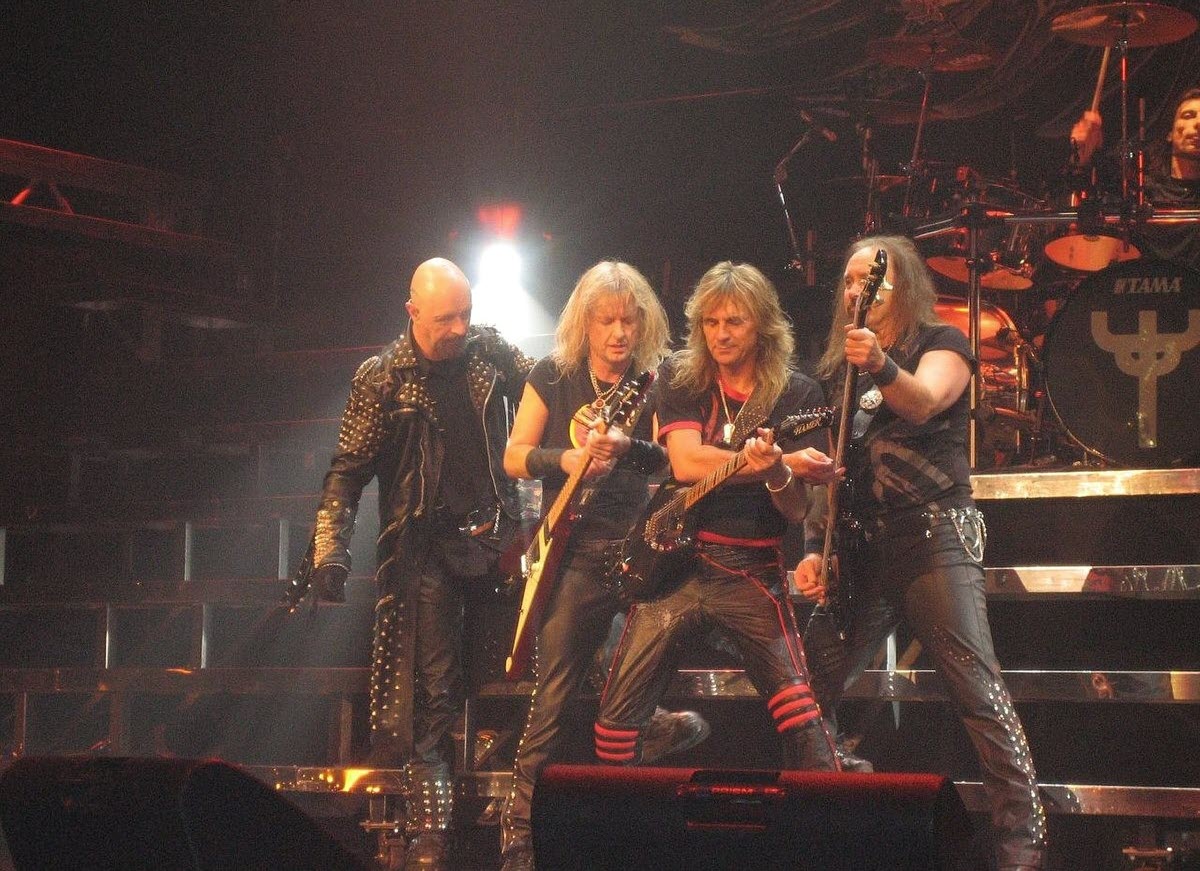
Judas Priest, formed in Birmingham, England in 1969, is a pivotal force in the heavy metal genre. Known for their innovative approach and defining the metal sound, the band has had a profound influence on generations of metal musicians. Fronted by the iconic vocalist Rob Halford, whose powerful voice and wide range are legendary, the band is renowned for their twin guitar attack, courtesy of Glenn Tipton and K.K. Downing. This signature sound, marked by harmonized solos and heavy riffs, has become a staple in metal music.
The band gained significant commercial success in the late 1970s and early 1980s with albums like *British Steel* (1980), featuring anthems such as “Breaking the Law” and “Living After Midnight.” These tracks encapsulate their blend of aggressive guitar work and catchy, rebellious lyrics.
Judas Priest’s image, characterized by leather and studs, has also left an indelible mark on metal fashion. Despite lineup changes over the years, the band’s core ethos and musical integrity have remained intact. Albums like *Painkiller* (1990) and *Firepower* (2018) showcase their enduring ability to innovate and energize.
Judas Priest’s contributions to heavy metal have earned them numerous accolades, including an induction into the Rock and Roll Hall of Fame, solidifying their status as metal legends.
1. The Hellion/Electric Eye
“The Hellion/Electric Eye” is an iconic two-part track by Judas Priest, opening their 1982 album *Screaming for Vengeance*. “The Hellion” serves as an instrumental prelude, featuring powerful guitar harmonies that seamlessly transition into “Electric Eye.” “Electric Eye” showcases the band’s signature heavy metal sound with its fast-paced riffs, driving rhythm, and Rob Halford’s commanding vocals. The lyrics delve into themes of surveillance and control, with the “Electric Eye” symbolizing a powerful, all-seeing entity. This track combination is a fan favorite, often performed together live, and remains one of Judas Priest’s most memorable and influential works.
2. Metal Gods
“Metal Gods” is a song by Judas Priest, featured on their 1980 album *British Steel*. The track is a fan favorite and a staple in the band’s live performances. Written by Rob Halford, Glenn Tipton, and K.K. Downing, “Metal Gods” embodies the powerful and anthemic qualities that define Judas Priest’s music.
Lyrically, “Metal Gods” delves into themes of power and domination, reflecting a futuristic vision where metal beings rule over humanity. The song’s title has also become synonymous with Judas Priest themselves, often referred to as the “Metal Gods” due to their pioneering influence and iconic status in the heavy metal genre.
Musically, the song is characterized by its driving rhythm, thunderous drums, and dual guitar harmonies, which are hallmarks of Judas Priest’s sound. The heavy, chugging riffs and Halford’s commanding vocals create an atmosphere of intensity and grandeur, making “Metal Gods” a quintessential metal anthem.
The impact of “Metal Gods” extends beyond its musical composition. It has cemented Judas Priest’s reputation as trailblazers in the heavy metal scene, and its themes have resonated with fans, contributing to the band’s legacy as true “Metal Gods” in the world of rock music.
3. Turbo Lover
“Turbo Lover” is a song by Judas Priest from their 1986 album *Turbo*. The track stands out for its incorporation of synthesizers and a more polished production style, which marked a departure from the band’s earlier, grittier sound. Despite initial mixed reactions from some fans, “Turbo Lover” has become one of Judas Priest’s most iconic songs, showcasing their ability to innovate within the heavy metal genre.
Lyrically, “Turbo Lover” explores themes of speed, power, and desire, using the metaphor of a high-speed vehicle to convey an intense romantic experience. Rob Halford’s distinctive vocal delivery, combined with the song’s driving beat and memorable chorus, creates an infectious and dynamic listening experience.
Musically, “Turbo Lover” is characterized by its sleek, synthesized melodies intertwined with the band’s signature heavy guitar riffs. This blend of electronic elements with traditional metal instrumentation was both a bold and controversial move at the time, reflecting the band’s willingness to experiment and evolve their sound.
Over the years, “Turbo Lover” has gained appreciation for its catchy hooks and innovative approach, becoming a highlight in Judas Priest’s live performances. The song’s enduring popularity underscores the band’s versatility and their ability to push the boundaries of heavy metal while retaining their core identity.
4. Breaking the Law
“Breaking the Law” is one of Judas Priest’s most iconic and recognizable songs, featured on their 1980 album *British Steel*. Written by Rob Halford, Glenn Tipton, and K.K. Downing, the song captures the rebellious spirit and raw energy that define Judas Priest’s music.
Lyrically, “Breaking the Law” tells the story of frustration and defiance, reflecting the struggles and disillusionment of everyday life. The narrative of a protagonist driven to breaking the law resonates with themes of rebellion and empowerment, making it an anthem for those feeling marginalized or oppressed. Its straightforward and relatable lyrics have contributed to its widespread appeal and enduring popularity.
Musically, the song is built around a simple yet powerful riff, driving bassline, and dynamic drumming, creating an immediate and infectious energy. Rob Halford’s commanding vocal performance and the song’s concise, punchy structure make it a perfect example of classic heavy metal. The iconic opening riff and catchy chorus have made “Breaking the Law” a staple in Judas Priest’s live sets and a favorite among fans.
The music video for “Breaking the Law” further cemented its legendary status, featuring the band members in a tongue-in-cheek heist scenario. The song has been covered and referenced by numerous artists, solidifying its place in rock history. “Breaking the Law” remains a testament to Judas Priest’s influence and their ability to create timeless, anthemic metal music.
5. You’ve Got Another Thing Comin’
“You’ve Got Another Thing Comin'” is a classic heavy metal anthem by Judas Priest, featured on their 1982 album *Screaming for Vengeance*. Known for its powerful guitar riffs, driving beat, and Rob Halford’s distinctive vocals, the song embodies the rebellious spirit and energy of 1980s metal. Its lyrics convey themes of determination and defiance, encouraging listeners to persevere against adversity. The track became a commercial success, reaching the Billboard Hot 100 and helping to cement Judas Priest’s status as heavy metal icons. It remains a fan favorite and a staple of the band’s live performances.
6. Living After Midnight
“Living After Midnight” is a signature song by British heavy metal band Judas Priest, released in 1980 on their album *British Steel*. The song is characterized by its infectious, upbeat rhythm, catchy guitar riffs, and Rob Halford’s energetic vocals. Lyrically, it captures the spirit of late-night partying and rebellion, celebrating a carefree, nocturnal lifestyle. Its memorable chorus and accessible sound helped it become one of the band’s most popular and enduring tracks. “Living After Midnight” played a significant role in bringing heavy metal to a broader audience, solidifying Judas Priest’s influence in the genre.
7. Hell Bent for Leather
“Hell Bent for Leather” is a defining track by Judas Priest, released on their 1978 album *Killing Machine*, which was retitled *Hell Bent for Leather* for its U.S. release. The song is known for its fast-paced, driving rhythm and fierce guitar work, embodying the band’s signature heavy metal sound. Rob Halford’s powerful vocals and the rebellious, leather-clad imagery conveyed in the lyrics emphasize a tough, uncompromising attitude. As one of Judas Priest’s most iconic songs, “Hell Bent for Leather” became a live performance staple, often featuring Halford riding a motorcycle onstage, further cementing the band’s metal legend status.
8. Electric Eye
“Electric Eye” is a powerful and influential song by Judas Priest, featured on their 1982 album *Screaming for Vengeance*. The track is known for its compelling blend of hard-hitting riffs, intense vocals, and thought-provoking lyrics, making it a standout in the band’s extensive discography.
Lyrically, “Electric Eye” explores themes of surveillance and control, depicting a future where technology monitors every move of individuals. This dystopian narrative, delivered through Rob Halford’s piercing vocals, captures the growing anxieties around privacy and government overreach, themes that remain relevant today. The title refers to a satellite that watches over the Earth, reflecting the omnipresence and invasiveness of modern surveillance.
Musically, “Electric Eye” opens with “The Hellion,” an instrumental prelude that sets the stage with its epic, soaring guitar harmonies. As “Electric Eye” kicks in, Glenn Tipton and K.K. Downing’s dual guitar attack drives the song forward with sharp, aggressive riffs and intricate solos, while Ian Hill’s bass and Dave Holland’s drums provide a solid, relentless rhythm foundation. The combination of these elements creates a dynamic and electrifying listening experience.
“Electric Eye” has become a fan favorite and a staple of Judas Priest’s live performances. Its impact on the heavy metal genre is profound, influencing countless bands with its blend of technical proficiency and thematic depth. The song exemplifies Judas Priest’s ability to merge powerful music with meaningful commentary, solidifying their legacy as pioneers of heavy metal.
9. Painkiller
“Painkiller” is a high-energy, hard-hitting track by Judas Priest, released in 1990 on their album of the same name. The song is renowned for its blistering speed, aggressive guitar riffs by Glenn Tipton and K.K. Downing, and Scott Travis’s thunderous drumming. Rob Halford’s intense, soaring vocals narrate the tale of a metal savior known as the Painkiller, who arrives to save humanity. This song marked a return to a heavier sound for the band and is celebrated as one of their greatest achievements. “Painkiller” remains a fan favorite and a testament to Judas Priest’s influence in the metal genre.
10. Screaming for Vengeance
“Screaming for Vengeance” is a powerful track by Judas Priest, featured on their 1982 album of the same name. Known for its aggressive guitar riffs, rapid tempo, and Rob Halford’s piercing vocals, the song exemplifies the band’s signature heavy metal style. The lyrics reflect themes of rebellion and retribution, delivering a message of fighting back against oppression. As the title track of one of Judas Priest’s most successful albums, “Screaming for Vengeance” played a significant role in solidifying their place in the heavy metal pantheon. The song remains a staple in their live performances and a favorite among fans.

Edward Tomlin is a frequent contributor to Singers Room. Since 2005, Singersroom has been the voice of R&B around the world. Connect with us via social media below.









