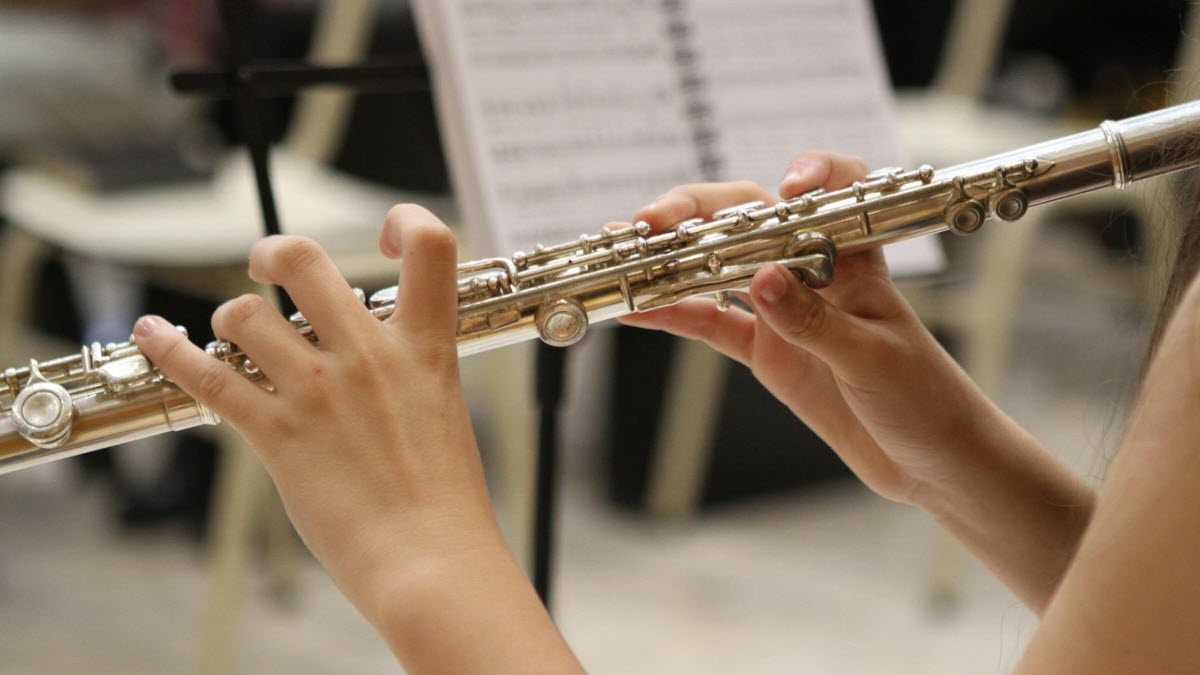
Flute players, or flutists, are musicians who specialize in playing the flute, a versatile and ancient woodwind instrument. The flute’s distinct, clear, and ethereal sound is produced by blowing across the mouthpiece’s opening, creating vibrations within the instrument’s tube. Flutists often display a remarkable combination of technical skill, breath control, and musical expressiveness.
Flutists play a wide range of musical genres, from classical and jazz to folk and contemporary music. In classical settings, they are integral members of orchestras, chamber ensembles, and solo performances, contributing to both melodic lines and intricate harmonies. Their repertoire spans from Baroque compositions to modern works, often pushing the boundaries of the instrument’s capabilities.
Jazz flutists bring improvisation and a unique stylistic flair to their performances, blending the flute’s voice seamlessly with other instruments in the genre. In folk music traditions worldwide, flutists use various types of flutes, each with its distinct sound and cultural significance, enriching the genre’s musical diversity.
Becoming a proficient flutist requires rigorous practice and a deep understanding of music theory and performance techniques. Many flutists begin their training at a young age, gradually developing the necessary technical prowess and interpretative skills. Advanced flutists often continue their education at conservatories and universities, refining their craft under the guidance of master teachers.
Flutists also contribute to the advancement of flute music by participating in festivals, competitions, and educational initiatives. Their dedication to their art form helps preserve the rich history of the flute while continuously expanding its expressive possibilities. Through their performances and teachings, flutists inspire new generations of musicians and bring the captivating sound of the flute to audiences worldwide.
1. Peter Gabriel
Peter Gabriel is an English musician, singer, and songwriter, renowned for his innovative contributions to music and his role as the lead vocalist of the progressive rock band Genesis. Born on February 13, 1950, Gabriel’s solo career blossomed with hits like “Solsbury Hill” and “Sledgehammer.” His music blends rock, pop, and world music, often incorporating cutting-edge technology and rich visual elements in his performances. A passionate activist, Gabriel co-founded the human rights organization Witness and the world music festival WOMAD. His pioneering spirit and artistic vision have cemented his status as a transformative figure in contemporary music.
2. Alain Marion
Alain Marion was a distinguished French flutist and pedagogue, renowned for his exceptional artistry and significant contributions to the world of classical music. Born on December 25, 1938, Marion studied at the Paris Conservatoire and later became one of its esteemed professors. His virtuosity and expressive playing earned him international acclaim, and he performed with major orchestras and at prestigious festivals worldwide. Marion was also a dedicated teacher, mentoring numerous flutists who have gone on to successful careers. His legacy continues through his recordings, his influential teaching methods, and the profound impact he had on the flute community.
3. Maxim Vengerov
Maxim Vengerov is a world-renowned Russian-born violinist and conductor, celebrated for his virtuosic technique and emotive performances. Born on August 20, 1974, in Novosibirsk, Vengerov began his violin studies at the age of five and quickly rose to prominence, winning the prestigious Wieniawski and Carl Flesch International Violin Competitions. His illustrious career includes collaborations with leading orchestras and conductors, as well as a foray into conducting himself. Vengerov is also dedicated to music education and philanthropy, serving as a professor and ambassador for numerous cultural and charitable organizations, making significant contributions to the global classical music scene.
4. William Kincaid
William Kincaid was a pivotal figure in the world of flute playing, widely recognized as the father of the American flute school. Born on April 26, 1895, Kincaid served as the principal flutist of the Philadelphia Orchestra from 1921 to 1960, under the legendary conductor Leopold Stokowski. His expressive tone, technical prowess, and innovative teaching methods set new standards for flutists. Kincaid was also a revered teacher at the Curtis Institute of Music, where he mentored many prominent flutists who continued his legacy. His influence on American flute playing and pedagogy remains profound, cementing his status as a legendary musician and educator.
5. András Adorján
András Adorján is a distinguished Hungarian flutist, celebrated for his exceptional artistry and contributions to the flute repertoire. Born on September 26, 1944, in Budapest, Adorján initially studied dentistry before fully committing to his musical passion. His career took off after winning several international competitions, establishing him as a leading flutist. Adorján has performed with many of the world’s premier orchestras and has a diverse discography that includes both classical and contemporary works. In addition to his performing career, he is a dedicated teacher, holding professorships and conducting masterclasses worldwide, profoundly influencing the next generation of flutists.
6. Jeanne Baxtresser
Jeanne Baxtresser is a highly acclaimed American flutist, celebrated for her exceptional artistry and significant contributions to classical music. Born on August 2, 1947, she served as the principal flutist of the New York Philharmonic from 1981 to 2001, becoming one of the first women to hold a principal position in a major American orchestra. Baxtresser’s performances are known for their brilliant tone and technical mastery. As a dedicated educator, she has taught at prestigious institutions like the Juilliard School and the Manhattan School of Music, influencing generations of flutists. Her publications and recordings continue to inspire and shape the flute community.
7. Robert Dick
Robert Dick is an innovative American flutist, composer, and inventor, renowned for his pioneering work in contemporary flute music. Born on January 4, 1950, Dick has expanded the possibilities of flute playing through his exploration of extended techniques, including multiphonics, circular breathing, and vocalization. His compositions often push the boundaries of conventional flute repertoire, incorporating elements of jazz, rock, and world music. Dick is also an influential educator, having authored several important pedagogical works and taught at institutions such as New York University. His invention of the Glissando Headjoint, which allows for pitch bending, further showcases his dedication to expanding the expressive capabilities of the flute.
8. Aurèle Nicolet
Aurèle Nicolet (1926-2016) was a Swiss flutist renowned for his exquisite technique and expressive playing. Born on January 22, 1926, in Neuchâtel, Nicolet studied at the Paris Conservatory under Marcel Moyse, one of the most influential flutists of the 20th century. Nicolet’s career included principal flutist positions with prestigious orchestras, such as the Berlin Philharmonic under Herbert von Karajan. He was also a dedicated soloist and chamber musician, expanding the flute repertoire by collaborating with contemporary composers. Beyond performing, Nicolet was a revered teacher, influencing countless students through his professorships and masterclasses, leaving a lasting legacy in the world of classical music.
9. Galway
Sir James Galway is an acclaimed Northern Irish flutist, often referred to as “The Man with the Golden Flute.” Born on December 8, 1939, in Belfast, Galway’s exceptional talent and charismatic stage presence have made him one of the most famous flutists in the world. He studied at prestigious institutions such as the Royal College of Music and the Paris Conservatory. His career blossomed with his tenure as the principal flutist of the Berlin Philharmonic under Herbert von Karajan, followed by a highly successful solo career. Galway’s extensive discography spans classical and popular music, and he is also known for his educational efforts and masterclasses, inspiring flutists globally.
10. Geoffrey Gilbert
Geoffrey Gilbert (1914-1989) was an influential English flutist and teacher, celebrated for revolutionizing flute playing in the United Kingdom. Born on May 28, 1914, Gilbert was a pioneer in adopting the French style of flute playing, which emphasized a more flexible embouchure and greater expressive capability. He served as the principal flutist for major orchestras, including the London Philharmonic and the BBC Symphony Orchestra. Gilbert was also a dedicated educator, teaching at the Guildhall School of Music and Drama and the Royal Manchester College of Music. His students included many prominent flutists, ensuring his lasting impact on the flute-playing community.
11. Marcel Moyse
Marcel Moyse was a legendary French flutist and one of the most influential flute pedagogues of the 20th century. Born on May 17, 1889, Moyse studied at the Paris Conservatoire, where he was a student of renowned flutists Philippe Gaubert and Paul Taffanel. Moyse’s playing was celebrated for its expressiveness, technical precision, and beautiful tone. He performed with major French orchestras and was a founding member of the Société de Musique de Chambre pour Instruments à Vent.
As a teacher, Moyse profoundly impacted flute pedagogy, mentoring generations of flutists at the Paris Conservatoire and later at the Marlboro Music Festival in Vermont. His extensive collection of etudes and exercises, such as “De La Sonorité” and “Tone Development Through Interpretation,” remains fundamental to flute education worldwide. Marcel Moyse’s legacy endures through his recordings, compositions, and the countless flutists who continue to be inspired by his teachings.
12. Julius Baker
Julius Baker (1915-2003) was a renowned American flutist, highly regarded for his technical prowess and lyrical playing. Born on September 23, 1915, in Cleveland, Ohio, Baker studied at the Eastman School of Music and the Curtis Institute of Music. His distinguished career included principal flutist positions with the Cleveland Orchestra, the Pittsburgh Symphony, and the Chicago Symphony Orchestra. Baker was best known for his long tenure with the New York Philharmonic from 1965 to 1983. In addition to his orchestral work, he was a dedicated teacher at institutions such as the Juilliard School and the Curtis Institute, profoundly influencing generations of flutists with his artistry and pedagogy.
13. Emmanuel Pahud
Emmanuel Pahud is a renowned Swiss flutist celebrated for his exceptional artistry and technical brilliance. Born on January 27, 1970, in Geneva, he began playing the flute at age six and later studied at the Conservatoire National Supérieur de Musique de Paris. Pahud gained international acclaim as the principal flutist of the Berlin Philharmonic, a position he has held since 1993, apart from a brief hiatus.
His performances are characterized by their lyrical beauty, expressive depth, and masterful technique. Pahud’s extensive solo career includes collaborations with leading orchestras and conductors worldwide. He is also a dedicated chamber musician and has released numerous acclaimed recordings across a wide range of repertoire, from Baroque to contemporary works. As an influential figure in the classical music world, Emmanuel Pahud continues to inspire flutists and audiences with his dynamic performances and dedication to expanding the flute’s repertoire.
14. James Galway
James Galway is a distinguished Northern Irish flutist, widely celebrated for his virtuosic skill and charismatic stage presence. Born on December 8, 1939, in Belfast, Galway studied at the Royal College of Music in London and the Paris Conservatoire. His career took off when he became the principal flutist of the Berlin Philharmonic under Herbert von Karajan from 1969 to 1975.
Galway’s solo career has been marked by extensive international touring and numerous acclaimed recordings, spanning classical, folk, and popular music. Known as “The Man with the Golden Flute,” his performances are characterized by their warm, rich tone and impeccable technique. Galway has also made significant contributions as an educator, conducting masterclasses and publishing instructional materials. His approachable style and dedication to music education have inspired countless flutists and brought classical flute music to a broader audience.
15. Jean-Pierre Rampal
Jean-Pierre Rampal (1922-2000) was a legendary French flutist, renowned for bringing the flute to prominence as a solo instrument in the 20th century. Born on January 7, 1922, in Marseille, Rampal studied at the Paris Conservatory, where he won first prize in 1944. His exceptional technique and expressive playing style helped elevate the flute’s status in classical music. Rampal enjoyed a prolific solo career, performing internationally and recording extensively, covering a wide range of repertoire from Baroque to contemporary music. He also collaborated with many famous musicians and composers. In addition to performing, Rampal was a dedicated teacher, inspiring countless flutists worldwide through his recordings, concerts, and masterclasses.

Edward Tomlin is a frequent contributor to Singers Room. Since 2005, Singersroom has been the voice of R&B around the world. Connect with us via social media below.