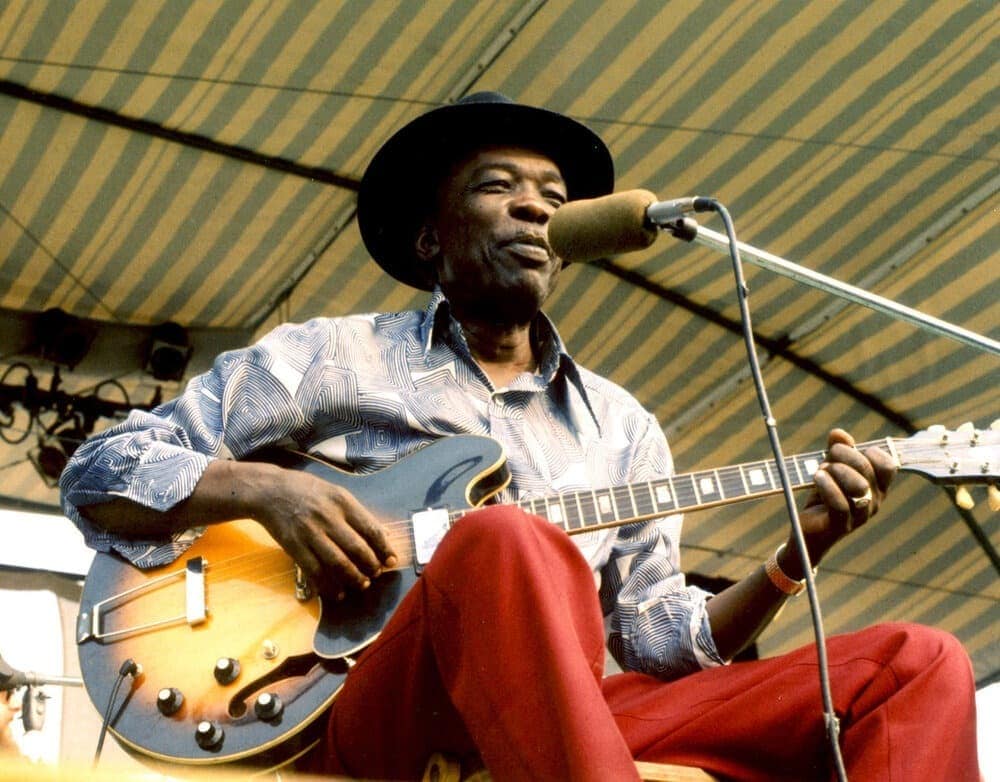
John Lee Hooker, born on August 22, 1917, was a pioneering American blues musician known for his distinctive guitar playing and deep, gravely voice. Hailing from Clarksdale, Mississippi, Hooker’s raw and primal style of blues music earned him the title “King of the Boogie.” His influential career spanned over five decades, during which he recorded numerous albums and singles that left an indelible mark on the blues genre.
Hooker’s music was characterized by its hypnotic rhythm, sparse instrumentation, and improvisational style. His songs often featured repetitive chord progressions and lyrics that were delivered with a raw and visceral intensity, creating a hypnotic and primal sound that was uniquely his own.
Throughout his career, Hooker’s music evolved and adapted to the changing times, influencing generations of musicians across various genres, including rock, jazz, and folk. His songs, such as “Boogie Chillen’,” “Boom Boom,” and “I’m in the Mood,” became blues standards and were covered by countless artists.
Hooker’s impact on the blues genre cannot be overstated. His raw, emotional style and innovative approach to the guitar helped to shape the sound of modern blues music, earning him a place among the greatest musicians of all time. He was inducted into the Rock and Roll Hall of Fame in 1991 and received numerous other accolades throughout his illustrious career.
1. I Don’t Want Your Money
“I Don’t Want Your Money” is a song by British rapper and singer Ed Sheeran, featuring American singer H.E.R. It was released as a single in 2019, ahead of Sheeran’s fourth studio album, “No.6 Collaborations Project.”
Lyrically, “I Don’t Want Your Money” is a playful and light-hearted track about rejecting material wealth and valuing love and companionship over material possessions. In the song, Sheeran and H.E.R. trade verses expressing their desire for genuine connection and emotional intimacy, rather than superficial displays of wealth. They emphasize the importance of authenticity and sincerity in relationships, urging listeners to prioritize love and affection over money and materialism.
Musically, “I Don’t Want Your Money” features a catchy, upbeat melody and a lively, pop-infused instrumental arrangement. The song blends elements of pop, R&B, and hip hop, with Sheeran’s smooth vocals complemented by H.E.R.’s soulful voice. The track’s infectious rhythm and catchy hooks make it a feel-good anthem that is perfect for summer playlists and upbeat gatherings.
“I Don’t Want Your Money” received positive reviews from critics, who praised its catchy melody, infectious energy, and the chemistry between Sheeran and H.E.R. The song became a commercial success, charting in several countries and garnering millions of streams and views online. It remains a popular and beloved track among fans of both artists, known for its uplifting message and irresistible charm.
2. One Bourbon, One Scotch, One Beer
“One Bourbon, One Scotch, One Beer” is a blues song originally written and recorded by American blues artist John Lee Hooker in 1966. It is one of Hooker’s most famous and enduring songs, showcasing his distinctive style of Delta blues.
Lyrically, “One Bourbon, One Scotch, One Beer” tells the story of a man who has been down on his luck and is seeking solace in alcohol. The song’s protagonist recounts his troubles, including losing his job, being evicted from his apartment, and having his woman leave him. He decides to drown his sorrows by ordering “one bourbon, one scotch, and one beer” at a bar, intending to drink away his troubles.
Musically, “One Bourbon, One Scotch, One Beer” features a simple yet compelling blues riff played on the guitar, accompanied by Hooker’s raw and emotive vocals. The song’s steady rhythm and repetitive structure create a hypnotic groove that draws listeners in and captures the essence of the blues.
“One Bourbon, One Scotch, One Beer” has been covered by numerous artists over the years, including George Thorogood and the Destroyers, who released a popular version of the song in 1977. Thorogood’s rendition brought renewed attention to the song and helped introduce it to a wider audience.
With its timeless lyrics and infectious groove, “One Bourbon, One Scotch, One Beer” has become a classic of the blues genre, celebrated for its authenticity, storytelling, and enduring appeal. It remains a favorite among blues enthusiasts and continues to be performed and enjoyed by audiences around the world.
3. Messin’ with the Hook
“Messin’ with the Hook” is a spirited and dynamic album by blues legend John Lee Hooker, released in 1973. The album showcases Hooker’s raw and gritty style of blues, featuring his distinctive guitar playing and powerful vocals.
With tracks like “Messin’ with the Hook,” “The Road Is So Rough,” and “How Can You Do It,” Hooker delivers a mesmerizing blend of traditional blues and electrifying rock influences. The album’s driving rhythms, hypnotic grooves, and soulful melodies capture the essence of Hooker’s timeless sound, drawing listeners into a world of passion, pain, and redemption.
“Messin’ with the Hook” received acclaim from critics and audiences alike for its authenticity, energy, and emotional depth. Hooker’s raw, unfiltered performances on the album showcase his mastery of the blues genre and his ability to connect with listeners on a visceral level.
As one of the standout albums in John Lee Hooker’s extensive discography, “Messin’ with the Hook” remains a beloved classic among blues enthusiasts. Its powerful blend of raw emotion, soulful expression, and electrifying energy continues to captivate audiences, solidifying Hooker’s legacy as one of the greatest blues musicians of all time.
4. Chill Out (Things Gonna Change)
“Chill Out (Things Gonna Change)” is a poignant and soulful track by blues legend John Lee Hooker, featured on his acclaimed album “Chill Out,” released in 1995. The song, which also serves as the title track of the album, showcases Hooker’s timeless talent for blending traditional blues with contemporary sensibilities.
With its slow, simmering groove and haunting guitar riffs, “Chill Out (Things Gonna Change)” captures the essence of Hooker’s signature style. The song’s lyrics convey a message of resilience and hope in the face of adversity, as Hooker sings about the inevitability of change and the need to stay calm and composed amidst life’s challenges.
“Chill Out (Things Gonna Change)” received widespread acclaim from critics and audiences alike for its emotive performance and powerful message. Hooker’s soulful vocals, coupled with his masterful guitar playing, create a mesmerizing atmosphere that draws listeners in and holds them captivated from start to finish.
As one of the standout tracks on the “Chill Out” album, “Chill Out (Things Gonna Change)” remains a fan favorite and a testament to John Lee Hooker’s enduring legacy as one of the greatest blues musicians of all time. Its timeless message of resilience and hope continues to resonate with audiences, solidifying Hooker’s reputation as a true master of the blues.
5. Dimples
“Dimples” is a classic blues song originally written and recorded by blues legend John Lee Hooker in 1956. It is one of Hooker’s most famous and enduring tracks, showcasing his raw and distinctive style of blues.
The song’s title refers to a physical feature often associated with attractiveness and charm, and Hooker uses this imagery to explore themes of desire and seduction. With its catchy guitar riff and infectious rhythm, “Dimples” is instantly recognizable and has become a staple of the blues genre.
Lyrically, the song features Hooker’s trademark storytelling style, with vivid imagery and clever wordplay. He sings about a woman with dimples in her cheeks and the effect she has on him, capturing the longing and passion that often define the blues.
“Dimples” has been covered by numerous artists over the years and has remained popular with audiences worldwide. Its timeless appeal and Hooker’s powerful performance have cemented its status as a classic of the blues genre, showcasing his influence and lasting impact on music history.
6. Blues Before Sunrise
“Blues Before Sunrise” is a classic blues song originally recorded by American blues musician Leroy Carr in 1934. It is one of Carr’s most famous compositions and has since become a standard in the blues repertoire.
Lyrically, “Blues Before Sunrise” is a lament about lost love and heartache. The narrator reflects on the pain of a failed relationship, expressing feelings of loneliness and longing as they face the dawn alone. The lyrics paint a vivid picture of a desolate landscape, with the narrator wandering the streets in the early hours of the morning, haunted by memories of happier times.
Musically, “Blues Before Sunrise” is characterized by its slow tempo, mournful melody, and soulful vocal delivery. Carr’s rich baritone voice conveys a sense of deep emotion and vulnerability, while the sparse instrumental accompaniment highlights the song’s melancholic atmosphere. The somber piano chords and understated guitar fills create a haunting backdrop for Carr’s poignant lyrics.
“Blues Before Sunrise” has been covered by numerous artists over the years, including influential blues musicians such as Elmore James, Eric Clapton, and B.B. King. Each interpretation brings its own unique flavor to the song, while paying homage to Carr’s original version.
With its timeless themes of heartbreak and despair, “Blues Before Sunrise” remains a powerful and evocative song that continues to resonate with listeners today. It stands as a testament to the enduring legacy of Leroy Carr and his contributions to the blues genre.
7. Crawling King Snake
“Crawling King Snake” is a blues song that has been recorded by various artists over the years, but it is most closely associated with American blues musician John Lee Hooker. Hooker recorded the song in 1949, and it has since become one of his most famous and enduring compositions.
Lyrically, “Crawling King Snake” is a classic example of blues storytelling. The song describes the movements and behavior of a snake, using the metaphor of the snake to convey themes of desire, temptation, and sexuality. The narrator describes being captivated by the sight of the snake crawling along the ground, and expresses a longing to follow the snake and succumb to its charms.
Musically, “Crawling King Snake” features a hypnotic, slinky groove that mirrors the movements of the snake described in the lyrics. The song is built around a simple, repetitive guitar riff, accompanied by sparse percussion and Hooker’s deep, resonant vocals. The minimalistic arrangement allows the song’s hypnotic rhythm and evocative lyrics to take center stage, creating a powerful and mesmerizing listening experience.
“Crawling King Snake” has been covered by numerous artists over the years, including The Doors, who recorded a popular version of the song for their 1971 album “L.A. Woman.” However, it is Hooker’s original recording that remains the definitive version of the song, and it continues to be celebrated as a classic of the blues genre.
8. I’m In The Mood
“I’m in the Mood” is a classic blues song originally recorded by American blues musician John Lee Hooker in 1951. It is one of Hooker’s most well-known and enduring songs, showcasing his distinctive guitar playing and raw vocal style.
Lyrically, “I’m in the Mood” is a straightforward expression of desire and passion. The narrator declares their readiness for love and affection, expressing a sense of urgency and longing to connect with their partner. The lyrics are characterized by their simplicity and directness, conveying a sense of immediacy and emotional intensity.
Musically, “I’m in the Mood” features a driving, hypnotic rhythm, with Hooker’s signature guitar riff providing the song’s backbone. His gritty vocals add to the song’s raw and primal energy, while the sparse instrumental arrangement allows his performance to take center stage. The song’s infectious groove and infectious melody make it a favorite among blues enthusiasts and a staple of Hooker’s live performances.
“I’m in the Mood” has been covered by numerous artists over the years, including artists such as Bonnie Raitt, Buddy Guy, and Taj Mahal. Each rendition brings its own unique interpretation to the song, while paying homage to Hooker’s original version.
With its timeless lyrics, infectious rhythm, and electrifying performance, “I’m in the Mood” remains a classic of the blues genre and a testament to John Lee Hooker’s enduring influence on music.
9. Boom Boom
“Boom Boom” is one of the most iconic and enduring songs in the blues genre, originally written and recorded by legendary blues artist John Lee Hooker in 1961. It is characterized by its infectious rhythm, hypnotic guitar riff, and catchy call-and-response lyrics, making it a quintessential example of Hooker’s raw and electrifying style of blues.
The song’s repetitive structure and driving beat create an irresistible groove that has captivated audiences for decades. Hooker’s powerful vocals and gritty delivery add to the song’s intensity, as he sings about the ups and downs of love and relationships.
“Boom Boom” has become one of Hooker’s signature songs and a staple of blues music. Its influence extends beyond the blues genre, with the song being covered by countless artists in various styles over the years.
With its timeless appeal and universal themes, “Boom Boom” remains a classic of the blues genre and a testament to John Lee Hooker’s enduring legacy as one of the greatest blues musicians of all time.
10. Boogie Chillen’
“Boogie Chillen'” is a seminal blues song by the legendary John Lee Hooker, released in 1948. It stands as one of the most influential tracks in blues history, setting the stage for Hooker’s iconic boogie-woogie style and cementing his status as a blues pioneer.
The song’s simplicity is its strength, featuring Hooker’s hypnotic guitar riff and powerful vocals. With its infectious rhythm and raw energy, “Boogie Chillen'” captures the essence of the Delta blues, while also foreshadowing the electrified sound that would define later blues and rock music.
Lyrically, the song is a celebration of music and nightlife, with Hooker inviting listeners to join him in a night of revelry and dancing. His gritty vocals and charismatic delivery bring the lyrics to life, evoking the atmosphere of a smoky juke joint in the Mississippi Delta.
“Boogie Chillen'” became an instant hit upon its release, reaching the top of the R&B charts and earning Hooker widespread acclaim. Its influence can be heard in countless blues and rock songs that followed, making it an essential piece of the blues canon and a testament to Hooker’s enduring legacy.

Edward Tomlin is a frequent contributor to Singers Room. Since 2005, Singersroom has been the voice of R&B around the world. Connect with us via social media below.









