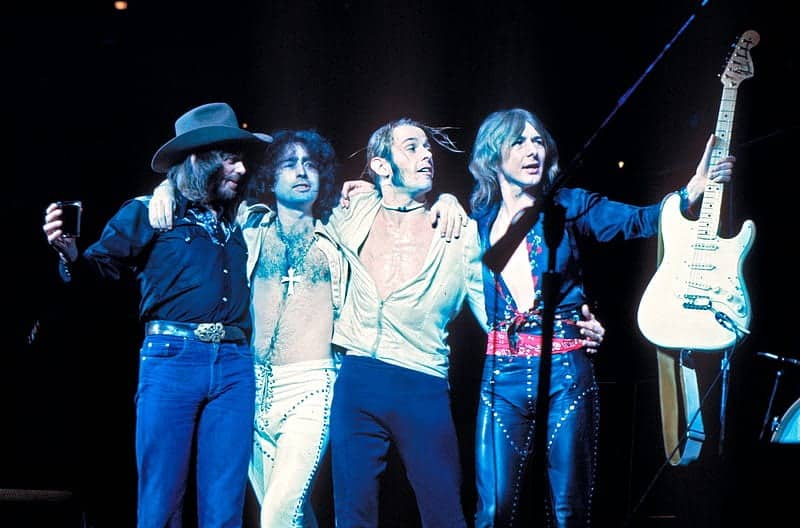
Bad Company is a British rock band that was formed in 1973. The original lineup consisted of members previously associated with notable rock acts. The band included vocalist Paul Rodgers and drummer Simon Kirke, both formerly of Free, along with guitarist Mick Ralphs, formerly of Mott the Hoople, and bassist Boz Burrell, who had played with King Crimson.
Bad Company quickly gained success and recognition for their blues-influenced rock sound. One of their most well-known albums is their self-titled debut, “Bad Company,” released in 1974, which included hits like “Can’t Get Enough” and “Bad Company.” The band’s straightforward, guitar-driven rock style and Paul Rodgers’ soulful vocals became hallmarks of their sound.
Over the years, Bad Company underwent lineup changes, with various musicians joining and leaving the band. Despite these changes, Paul Rodgers and Simon Kirke remained constants throughout much of the band’s history. Bad Company continued to release albums and tour, maintaining a loyal fan base.
Some of Bad Company’s other notable songs include “Feel Like Makin’ Love,” “Shooting Star,” and “Rock ‘n’ Roll Fantasy.” Their music remains influential in the classic rock genre, and their self-titled debut album is often considered a classic in rock history.
1. Run With The Pack
“Run with the Pack” is the third studio album by the British rock band Bad Company, released in 1976. The album features the classic lineup of the band, including Paul Rodgers (vocals), Mick Ralphs (guitar), Simon Kirke (drums), and Boz Burrell (bass). Like their previous albums, “Run with the Pack” continued to showcase Bad Company’s blues-influenced hard rock sound.
The album includes a mix of rockers and ballads, highlighting the band’s versatility. The title track, “Run with the Pack,” is a bluesy and energetic song that captures the band’s signature sound. The album also includes other notable tracks such as “Live for the Music” and “Silver, Blue & Gold,” the latter being a slower, more reflective piece.
While “Run with the Pack” didn’t achieve the same level of commercial success as their debut album or its predecessor “Straight Shooter,” it still received positive reviews from critics and has maintained a solid reputation among fans of classic rock. Bad Company’s ability to blend hard rock with blues elements and Paul Rodgers’ soulful vocals continued to be a defining characteristic of their sound on this album.
2. Can’t Get Enough
“Can’t Get Enough” is a classic rock song by the English rock supergroup Bad Company. It was released as the lead single from their self-titled debut album, “Bad Company,” in 1974. The song was written by the band’s lead vocalist Paul Rodgers and became one of their most iconic and commercially successful tracks.
“Can’t Get Enough” features a distinctive guitar riff and a bluesy, hard rock sound that characterizes much of Bad Company’s music. The song’s lyrics express the intensity of romantic desire, with Paul Rodgers’ soulful vocals adding a layer of emotion to the composition.
The track was well-received and achieved notable success on the charts. It reached the top 5 on the Billboard Hot 100 in the United States, showcasing the band’s ability to blend rock with a more accessible, radio-friendly sound. The success of “Can’t Get Enough” contributed significantly to the overall popularity of Bad Company’s debut album, which became a major commercial success.
Over the years, “Can’t Get Enough” has remained a staple of classic rock radio playlists and is often considered one of Bad Company’s signature songs. Its timeless appeal lies in its catchy melody, memorable guitar work, and the powerful vocal delivery of Paul Rodgers, making it a standout track from the 1970s rock era.
3. Shooting Star
“Shooting Star” is another notable song by Bad Company, featured on their second studio album, “Straight Shooter,” released in 1975. The song was written by the band’s lead vocalist, Paul Rodgers, and it has become one of Bad Company’s most enduring and beloved tracks.
“Shooting Star” is a rock ballad with introspective lyrics that touch on the fleeting nature of fame and the consequences of a rock and roll lifestyle. The narrative of the song reflects on the rise and fall of a musician who experiences the highs and lows of success, ultimately facing the consequences of a fast-paced and indulgent lifestyle.
The song is characterized by its melodic guitar work and Paul Rodgers’ soulful vocals, creating a poignant and reflective atmosphere.
“Shooting Star” showcases Bad Company’s ability to combine rock elements with thoughtful lyrics, and it remains a classic rock staple. The song’s enduring popularity has solidified its place in the band’s discography and in the broader landscape of 1970s rock music.
4. Movin’ On
“Movin’ On” is a song by the British rock band Bad Company. It appears on their debut self-titled album, “Bad Company,” released in 1974. The band, formed by former members of Free and Mott the Hoople, included Paul Rodgers (vocals), Mick Ralphs (guitar), Simon Kirke (drums), and Boz Burrell (bass).
“Movin’ On” is a bluesy rock track that showcases Bad Company’s distinctive sound. The song features Paul Rodgers’ soulful and powerful vocals, complemented by Mick Ralphs’ guitar work. The lyrics of “Movin’ On” express themes of resilience and the determination to move forward despite challenges.
The debut album, including “Movin’ On,” was a commercial success, reaching No. 1 on the Billboard 200 chart. Other notable tracks from the album include “Can’t Get Enough” and “Bad Company,” which became signature songs for the band.
Bad Company’s self-titled debut remains one of their most celebrated works, and “Movin’ On” is often remembered as a key track from that album. The band’s bluesy, hard rock style and the charismatic vocals of Paul Rodgers contributed to their lasting impact on the classic rock genre.
5. Burnin’ Sky
“Burnin’ Sky” is the title track from the fourth studio album by the British rock band Bad Company. The album was released in 1977, and like their previous works, it features the core lineup of Paul Rodgers (vocals), Mick Ralphs (guitar), Simon Kirke (drums), and Boz Burrell (bass).
The song “Burnin’ Sky” is a bluesy rock ballad with a soulful edge, characteristic of Bad Company’s sound. Paul Rodgers’ emotive vocals convey a sense of introspection and melancholy. The lyrics paint a vivid picture of a person reflecting on their life, trials, and experiences, with the “burnin’ sky” symbolizing both turmoil and hope.
While “Burnin’ Sky” may not be as commercially prominent as some of Bad Company’s earlier hits, the album received positive reviews for its musical craftsmanship and the band’s commitment to their blues-influenced rock roots. The album also includes other notable tracks like “Heartbeat” and “Run with the Pack.”
Bad Company’s ability to blend rock with bluesy elements and soulful vocals remained a defining characteristic, and “Burnin’ Sky” is appreciated by fans for its musical depth and emotional resonance within the context of the album.
6. Gone, Gone, Gone
It appears there might be some confusion. “Gone, Gone, Gone” is a song by the American rock band, Bad Company, not to be confused with other songs of the same title by different artists. This track is from their self-titled debut album “Bad Company,” released in 1974.
“Gone, Gone, Gone” is a bluesy rock song with a distinctive guitar riff and the soulful vocals of Paul Rodgers, the band’s lead singer. The lyrics convey a sense of heartbreak and loss, as the narrator reflects on the departure of a loved one. The emotional depth of the song is complemented by the powerful instrumentation that Bad Company was known for.
The song wasn’t released as a single, but it has become a fan favorite and is often played on classic rock radio stations. With its evocative lyrics and musical craftsmanship, “Gone, Gone, Gone” is a testament to Bad Company’s ability to create timeless rock music that resonates with listeners across generations.
7. Rock and Roll Fantasy
“Rock and Roll Fantasy” is a song by Bad Company, released in 1979 on their album “Desolation Angels.” The song was written by the band’s guitarist Mick Ralphs. It became one of Bad Company’s most successful and enduring tracks.
“Rock and Roll Fantasy” has a classic rock sound with catchy guitar riffs and a driving rhythm. The lyrics reflect the escapism and dreams associated with the rock and roll lifestyle. In the song, the narrator expresses a desire to live in a world of music, freedom, and imagination.
The song was a commercial success, reaching the top 20 on the Billboard Hot 100 chart. “Rock and Roll Fantasy” remains a fan favorite and is often regarded as one of Bad Company’s signature songs. Its enduring popularity is attributed to its anthemic quality and its resonance with the rock and roll spirit.
8. Good Lovin’ Gone Bad
“Good Lovin’ Gone Bad” is a rock song by Bad Company, released on their third studio album, “Desolation Angels,” in 1979. The song was written by the band’s lead vocalist, Paul Rodgers. “Good Lovin’ Gone Bad” exemplifies the blues-infused hard rock sound that Bad Company was known for.
The lyrics of the song capture the theme of a troubled romantic relationship, where the thrill of passion has given way to difficulties and challenges. Paul Rodgers’ soulful vocals convey a mix of frustration and resignation, adding emotional depth to the narrative.
The instrumental arrangement features the dynamic guitar work of Mick Ralphs and the solid rhythm section of Boz Burrell (bass) and Simon Kirke (drums). The song’s catchy guitar riffs and memorable chorus contributed to its success on rock radio and in the charts.
“Good Lovin’ Gone Bad” became a popular track for Bad Company, showcasing their ability to craft rock anthems with a bluesy edge. The song has endured as one of the band’s classic hits and is often featured in their live performances. Its enduring appeal lies in its powerful musicality, relatable lyrics, and the distinctive sound that defined Bad Company’s contribution to the rock genre in the late 1970s.
9. Bad Company
“Bad Company,” the eponymous track from the band’s debut album released in 1974, is an iconic rock anthem that solidified Bad Company’s place in the classic rock pantheon. The song begins with a distinctive guitar riff, setting the stage for Paul Rodgers’ powerful and soulful vocals. The lyrics tell the story of a renegade seeking redemption, portraying a narrative of resilience and rebellion. The straightforward yet potent instrumentation, including the memorable guitar work, contributes to the song’s enduring appeal.
In the linked music video, the band’s performance is showcased in a live setting, capturing the raw energy and chemistry that defined Bad Company’s stage presence. The video complements the song’s rebellious spirit, offering a visual representation of the band’s unapologetic and authentic approach to rock music. “Bad Company” remains a quintessential track in the rock genre, celebrated for its catchy hooks, evocative lyrics, and the distinctive sound that became synonymous with the band’s name. As a timeless anthem, the song continues to resonate with audiences, encapsulating the free-spirited ethos of classic rock.
10. Feel Like Making Love
“Feel Like Makin’ Love” is one of Bad Company’s most iconic songs, released in 1975 as a part of their album “Straight Shooter.” The song was written by the band’s vocalist Paul Rodgers and their drummer Simon Kirke. “Feel Like Makin’ Love” is a classic rock ballad with a soulful edge and is recognized for its smooth and melodic sound.
The lyrics convey a sense of intimacy and passion, exploring the feelings of love and desire. Paul Rodgers’ distinctive vocals, coupled with the emotional guitar work by Mick Ralphs, contribute to the song’s timeless appeal. The chorus, with the repeated line “Feel like makin’ love to you,” has become particularly memorable.
The song achieved commercial success, reaching high positions on the charts in the United States and the United Kingdom. “Feel Like Makin’ Love” has endured over the years and is considered one of Bad Company’s signature songs. Its romantic and soulful vibe has made it a favorite for fans of classic rock, and it remains a staple on classic rock radio playlists.

Edward Tomlin is a frequent contributor to Singers Room. Since 2005, Singersroom has been the voice of R&B around the world. Connect with us via social media below.









