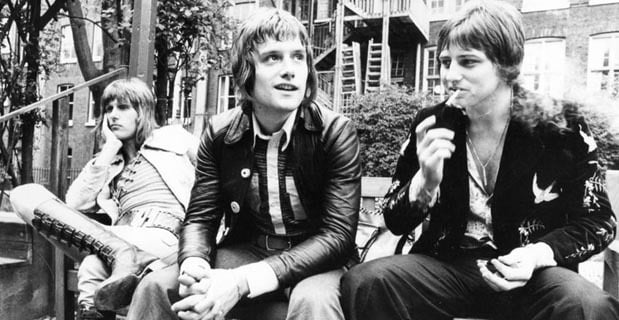
Emerson, Lake & Palmer (ELP) was a progressive rock supergroup formed in England in 1970. The band consisted of keyboardist Keith Emerson, vocalist and bassist Greg Lake, and drummer Carl Palmer. Each member brought a wealth of experience and talent from their previous musical endeavors.
Keith Emerson, previously known for his work with The Nice, was a virtuoso keyboardist known for his dynamic and often elaborate synthesizer and organ performances. Greg Lake, who had previously been a member of King Crimson, contributed vocals and bass guitar, bringing a melodic and expressive voice to the band. Carl Palmer, known for his drumming in Atomic Rooster and The Crazy World of Arthur Brown, provided powerful and intricate percussion.
Emerson, Lake & Palmer were pioneers in the progressive rock genre, blending classical influences with rock and jazz elements. They achieved critical and commercial success with albums like “Tarkus,” “Trilogy,” and “Brain Salad Surgery.” The band was renowned for their elaborate live performances, featuring complex arrangements, improvisations, and the use of advanced technology, including Emerson’s impressive array of keyboards.
Despite their success, ELP disbanded in 1979, only to reunite for various periods in the 1990s and early 2000s. Keith Emerson’s death in 2016 marked the end of the original trio, but their legacy as one of the influential and innovative bands in the progressive rock movement endures.
1. Lucky Man
“Lucky Man” is a song by Emerson, Lake & Palmer (ELP), released in 1970 on their self-titled debut album. The song was written by Greg Lake, the band’s bassist and vocalist. “Lucky Man” became one of ELP’s most well-known and enduring tracks.
The song begins with an acoustic guitar passage played by Greg Lake, showcasing a folk-influenced sound. It features Lake’s distinct and melodic vocals, delivering lyrics that touch on themes of fortune, mortality, and reflection. The standout feature of the song is Keith Emerson’s iconic Moog synthesizer solo, which adds a futuristic and experimental element to the otherwise folk-inspired piece.
Despite being a relatively simple and concise track compared to some of ELP’s more complex compositions, “Lucky Man” became a surprise hit and received significant radio play. The success of the song contributed to the popularity of the band’s debut album and helped establish Emerson, Lake & Palmer as a major force in the progressive rock genre.
“Lucky Man” remains a classic in the progressive rock canon and is often considered one of the band’s signature songs. Its enduring popularity is partly attributed to its timeless melody, memorable lyrics, and the innovative use of synthesizers, showcasing the band’s ability to merge different musical styles within the progressive rock framework.
2. From the Beginning
“From the Beginning” is another notable song by Emerson, Lake & Palmer (ELP), released in 1972 on their album “Trilogy.” Like “Lucky Man,” this song features the talents of the band members in crafting a melodic and memorable composition.
Written by Greg Lake, “From the Beginning” is a ballad that highlights Lake’s acoustic guitar work and expressive vocals. The song’s lyrics explore themes of love, reflection, and the cyclical nature of relationships. It is known for its poignant and introspective quality, with Lake’s vocals conveying a sense of vulnerability.
The arrangement includes Keith Emerson’s subtle use of synthesizers, which add a layer of texture to the acoustic foundation. The combination of Lake’s emotive singing, acoustic guitar, and Emerson’s tasteful synthesizer contributions creates a beautiful and timeless piece.
“From the Beginning” received positive reviews and became one of ELP’s popular tracks, demonstrating their ability to create both intricate, progressive compositions and more accessible, melodic songs. The song remains a fan favorite and a representation of the band’s versatility within the progressive rock genre.
3. Fanfare for the Common Man
“Fanfare for the Common Man” is an instrumental composition by the British progressive rock band Emerson, Lake & Palmer (ELP). The piece was written by American composer Aaron Copland and was originally composed in 1942 during World War II as a patriotic musical response to the U.S. entry into the war.
ELP recorded their version of “Fanfare for the Common Man” for their 1977 album “Works Volume 1.” The band adapted Copland’s classical composition into a rock arrangement, adding their own distinctive touch to the piece. Keith Emerson’s synthesizer work, Greg Lake’s bass, and Carl Palmer’s drumming contributed to the band’s progressive rock interpretation of the classical fanfare.
ELP’s rendition of “Fanfare for the Common Man” became one of their signature pieces and a staple of their live performances. The adaptation retains the grand and majestic qualities of Copland’s original while infusing it with the energy and virtuosity characteristic of progressive rock.
The title itself is a nod to Copland’s democratic vision for the piece, suggesting that this fanfare is for the everyday person, the “common man.” ELP’s version of “Fanfare for the Common Man” is celebrated for its dynamic and powerful delivery, showcasing the band’s ability to merge classical and rock elements seamlessly.
4. Karn Evil 9
“Karn Evil 9” is a progressive rock composition by the British rock band Emerson, Lake & Palmer (ELP). It is a multi-part suite and serves as the centerpiece of their 1973 album “Brain Salad Surgery.” The suite is divided into three impressions, each with its own title: “Karn Evil 9: 1st Impression,” “Karn Evil 9: 2nd Impression,” and “Karn Evil 9: 3rd Impression.”
“Karn Evil 9” is notable for its complex and ambitious structure, combining elements of classical music, jazz, and rock. The suite features intricate keyboard work by Keith Emerson, powerful bass and vocals by Greg Lake, and dynamic drumming by Carl Palmer. The lyrics, written by Lake, explore futuristic and dystopian themes, reflecting on the impact of technology and the potential dehumanization of society.
The suite is particularly famous for its opening line, “Welcome back my friends, to the show that never ends,” which has become an iconic introduction associated with ELP’s live performances.
“Karn Evil 9” remains one of Emerson, Lake & Palmer’s most well-known and enduring works. The suite showcases the band’s virtuosity and their ability to blend various musical styles into an epic and cohesive composition. The ambitious nature of “Karn Evil 9” contributed to ELP’s status as pioneers in the progressive rock genre.
5. Take a Pebble
“Take a Pebble” is a song by Emerson, Lake & Palmer (ELP), featured on their 1970 debut album, “Emerson, Lake & Palmer.” This composition is a demonstration of the band’s ability to blend various musical elements within an extended and intricate progressive rock structure.
Written by Greg Lake, “Take a Pebble” is a multifaceted piece that showcases the individual talents of each band member. The song begins with a delicate piano introduction by Keith Emerson, followed by Lake’s serene vocals and acoustic guitar. The composition then evolves through different sections, incorporating piano solos, drum interludes, and even a jazz-influenced segment.
One of the notable features of “Take a Pebble” is the inclusion of a “rubber band” bass solo performed by Greg Lake. This section involves Lake tapping and pulling the strings of his bass to create a distinctive sound, adding a unique and experimental element to the song.
Despite its complexity, “Take a Pebble” was well-received and became a staple of Emerson, Lake & Palmer’s live performances. The song’s dynamic structure and the band’s ability to seamlessly integrate diverse musical elements solidify its place as a classic within the progressive rock genre.
6. Still…You Turn Me On
“Still… You Turn Me On” is a song by the progressive rock band Emerson, Lake & Palmer (ELP). It was written and sung by the band’s guitarist, Greg Lake. The song is featured on the band’s 1973 album “Brain Salad Surgery.”
“Still… You Turn Me On” is a departure from the more complex and intricate compositions that characterize much of ELP’s work. It is a relatively simple and intimate acoustic guitar-driven song with a folk-influenced sound. The lyrics convey a sense of romantic longing and desire.
Greg Lake’s vocals and acoustic guitar are central to the song’s arrangement, providing a contrast to the more elaborate tracks on the album. Despite its simplicity, “Still… You Turn Me On” has a poignant and emotive quality that resonates with listeners.
While not as well-known as some of ELP’s larger-scale compositions, “Still… You Turn Me On” has become a fan favorite and is appreciated for its melodic beauty and the sincerity of Lake’s performance. The song showcases the band’s versatility and their ability to explore different musical styles within the progressive rock genre.
7. C’est La Vie
“C’est La Vie” is a song by Emerson, Lake & Palmer (ELP), featured on their 1977 album “Works Volume 1.” This particular track is notable for its departure from the band’s more complex and progressive rock sound, leaning towards a more accessible and radio-friendly style.
Written by Greg Lake and Peter Sinfield, “C’est La Vie” is characterized by its acoustic folk-rock elements. The song features Greg Lake’s melodic vocals, accompanied by acoustic guitar and a string arrangement. The lyrics convey a sense of acceptance and resignation, with the French phrase “C’est la vie” translating to “That’s life” in English.
“C’est La Vie” stands out in ELP’s discography as a more straightforward and commercially oriented composition. Its accessible nature contributed to the song’s success, and it became one of the band’s charting singles.
The departure from their typical progressive rock style in “C’est La Vie” showcases Emerson, Lake & Palmer’s versatility as musicians. While the song may have been different from their more intricate compositions, it demonstrated the band’s ability to explore diverse musical landscapes.
8. Knife-Edge
“Knife-Edge” is a song by Emerson, Lake & Palmer (ELP) from their eponymous debut studio album, released in 1970. The track is notable for its dynamic and progressive rock sound, featuring the virtuosic keyboard work of Keith Emerson, the distinctive vocals of Greg Lake, and the precision drumming of Carl Palmer.
The song opens with a powerful organ riff played by Emerson, immediately setting an energetic and dramatic tone. Lake’s vocals enter, delivering lyrics that touch upon themes of existentialism and the human experience. The composition progresses through various musical sections, showcasing the band’s technical prowess and ability to blend classical and rock elements seamlessly.
“Knife-Edge” is recognized for its complex and intricate arrangement, with each member of the trio contributing to the overall sound. The title itself reflects the sharp and cutting nature of the musical performance.
Emerson, Lake & Palmer’s debut album was influential in establishing the band’s reputation in the progressive rock genre, and “Knife-Edge” played a role in defining their distinctive style. The song has been performed live by the band on numerous occasions and remains a notable piece in their catalog.
9. Tarkus
“Tarkus” is a monumental and iconic composition by Emerson, Lake & Palmer (ELP), featured on their second studio album of the same name, released in 1971. This piece is often regarded as one of the quintessential works in the progressive rock genre, showcasing the band’s virtuosity and innovative approach to music.
The title track “Tarkus” is a 20-minute suite composed by Keith Emerson. The suite is divided into various sections, each with its own distinct musical themes, creating a progressive and evolving sonic journey. The music takes inspiration from a combination of classical, jazz, and rock influences, and it features extensive instrumental passages, complex arrangements, and innovative use of synthesizers.
The suite’s title, “Tarkus,” refers to a fictional character, a mythical Armadillo tank, which is illustrated on the album cover as a piece of anthropomorphic machinery. The themes within the music are open to interpretation, and the suite has been analyzed for its allegorical and metaphorical qualities.
“Tarkus” is a testament to the collaborative efforts of the band members, with Carl Palmer’s dynamic drumming, Greg Lake’s vocals and bass work, and Keith Emerson’s virtuosic keyboard skills all contributing to the composition’s grandeur. The album as a whole solidified Emerson, Lake & Palmer’s status as pioneers in the progressive rock movement, and “Tarkus” remains a celebrated and influential piece within the genre.
10. Hoedown
“Hoedown” is an instrumental piece by Emerson, Lake & Palmer (ELP), featured on their fourth studio album, “Trilogy,” released in 1972. The composition is a reinterpretation of the “Hoedown” section from Aaron Copland’s ballet “Rodeo,” originally composed in 1942.
ELP’s version of “Hoedown” is known for its energetic and dynamic arrangement, blending elements of rock, country, and classical music. The adaptation showcases Keith Emerson’s virtuosic synthesizer playing, Greg Lake’s bass work, and Carl Palmer’s precise drumming. The band added a progressive rock touch to Copland’s original composition, infusing it with their characteristic style.
The use of synthesizers, particularly the Moog synthesizer, gives “Hoedown” a distinctive and modern sound. The piece is characterized by its fast-paced tempo, intricate instrumental interplay, and the fusion of different musical genres.
“Hoedown” became one of the standout tracks on the “Trilogy” album and a popular choice in Emerson, Lake & Palmer’s live performances. The song’s lively and unconventional approach to blending classical and rock elements contributed to ELP’s reputation as pioneers in the progressive rock genre.

Edward Tomlin is a frequent contributor to Singers Room. Since 2005, Singersroom has been the voice of R&B around the world. Connect with us via social media below.









