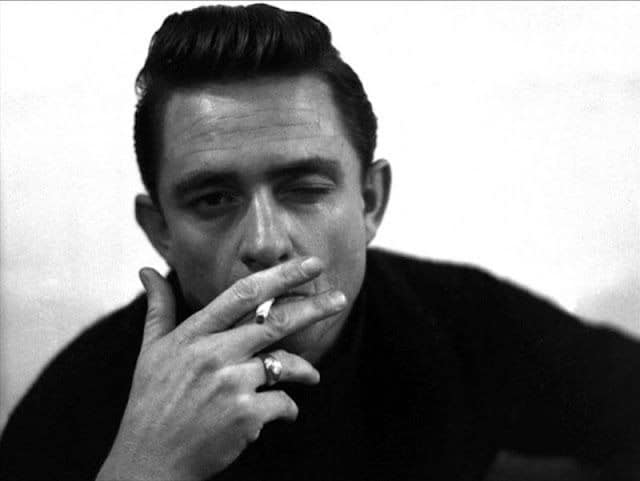
Johnny Cash, the “Man in Black,” was a towering figure in American music, whose influence stretched far beyond the confines of country. Born on February 26, 1932, in Kingsland, Arkansas, Cash’s early life experiences, including growing up during the Great Depression, laid the foundation for his deep empathy and connection with the common man.
Signing with Sun Records in the 1950s, Cash’s raw and powerful voice found expression in hits like “I Walk the Line” and “Folsom Prison Blues,” marking the beginning of a career that would span decades. His music seamlessly blended country, rock and roll, gospel, and folk, resonating with a diverse audience. The distinctive boom-chicka-boom sound of The Tennessee Three, his backing band, became synonymous with Cash’s brand of rebellious, yet deeply heartfelt, storytelling.
Beyond his musical prowess, Cash’s enduring legacy lies in his authenticity and willingness to tackle difficult subjects. Songs like “Man in Black” and “Hurt” showcase his introspective and often socially conscious songwriting. Cash’s remarkable career earned him numerous awards, including multiple Grammy Awards, and solidified his place as an American musical icon. His impact extends far beyond the realms of country music, making him a cultural force whose influence transcends generations. Johnny Cash passed away on September 12, 2003, leaving behind an indelible mark on the world of music.
1. I Walk the Line
“I Walk the Line” is one of Johnny Cash’s most iconic and enduring songs, released in 1956. Written by Cash himself, the song became a crossover hit, reaching the top of the country charts and making a significant impact on the pop charts as well.
The lyrics of “I Walk the Line” reflect Cash’s commitment to fidelity and his struggles with temptation. The famous line “I keep a close watch on this heart of mine; I keep my eyes wide open all the time” encapsulates the theme of devotion and self-discipline.
Musically, the song features a distinctive and steady rhythm created by Luther Perkins’ signature guitar riff. This rhythmic style, often referred to as the “boom-chicka-boom” sound, became a hallmark of Cash’s early recordings.
“I Walk the Line” not only established Cash as a leading figure in country music but also introduced his unique blend of country, rockabilly, and folk to a broader audience. The song’s timeless quality has ensured its place as one of Johnny Cash’s signature tracks, and it continues to resonate with listeners across generations.
2. Folsom Prison Blues
“Folsom Prison Blues” is a classic song by Johnny Cash, first released in 1955. Written by Cash during his military service in Germany, the song was inspired by a movie about Folsom Prison, and its distinctive, train-like guitar riff contributed to its enduring popularity.
The lyrics of “Folsom Prison Blues” tell the story of a man who, while incarcerated, laments his actions and expresses a longing to be elsewhere. The famous opening line, “I hear the train a-comin’, it’s rolling ’round the bend,” has become iconic in the realm of country music.
Cash’s raw and emotive delivery, combined with Luther Perkins’ distinctive guitar work and the rhythmic “boom-chicka-boom” sound of The Tennessee Three, created a musical landscape that set the song apart. The song’s success was further solidified when Cash recorded a live version at Folsom State Prison in 1968, during one of his historic prison performances.
“Folsom Prison Blues” has become one of Johnny Cash’s most celebrated and recognizable songs. Its impact on country and rock music, coupled with its association with Cash’s prison performances, has cemented its status as a classic in the American music canon.
3. Hurt
“Hurt” is a song originally written by Trent Reznor of Nine Inch Nails and later covered by Johnny Cash. Johnny Cash’s version is particularly notable for its emotional depth and the powerful impact it had on listeners.
Cash recorded “Hurt” in 2002, near the end of his life, for his album “American IV: The Man Comes Around.” The song’s music video, directed by Mark Romanek, also contributed significantly to its impact. The video features poignant images from Cash’s life and career, creating a retrospective and introspective atmosphere.
Cash’s cover transformed “Hurt” into a haunting and soulful reflection on aging, regret, and mortality. His weathered voice added a layer of authenticity to the lyrics, making the song even more poignant. The cover received widespread acclaim and brought a new level of attention to Cash in the later years of his career.
The emotional resonance of “Hurt” led many to consider Cash’s version as one of the greatest cover songs ever recorded. The sincerity and vulnerability conveyed in his rendition contributed to the song’s lasting impact, making it a standout moment in Johnny Cash’s extensive musical legacy.
4. Ring of Fire
“Ring of Fire” is a classic song associated with Johnny Cash, co-written by June Carter Cash and Merle Kilgore. The song was first recorded by Anita Carter in 1962 but gained widespread fame when Johnny Cash recorded his version in 1963.
The lyrics of “Ring of Fire” metaphorically describe the intense experience of falling in love. June Carter wrote the song about her feelings for Johnny Cash, and the “ring of fire” symbolizes the emotional intensity and passion that accompanies love.
Musically, the song is characterized by its distinctive Mariachi-style horn section, giving it a unique and memorable sound. Cash’s deep and resonant voice, combined with the lively instrumentation, contributed to the song’s success.
“Ring of Fire” became one of Johnny Cash’s signature songs, reaching number one on the country charts and crossing over to the pop charts. Its popularity was further amplified by Cash’s dynamic live performances, including his famous concerts at Folsom Prison and San Quentin.
The enduring appeal of “Ring of Fire” has made it a timeless classic, and it remains one of Johnny Cash’s most beloved and recognized songs.
5. Jackson
“Jackson” is a song famously performed by Johnny Cash and June Carter. It was written by Billy Edd Wheeler and Jerry Leiber and originally recorded by Wheeler. However, it gained widespread recognition and success through the rendition by Johnny Cash and June Carter.
The Cash-Carter version of “Jackson” was released in 1967 as a single and later appeared on their album “Carryin’ On with Johnny Cash & June Carter.” The song is a lively and humorous duet between Cash and Carter. It revolves around a couple contemplating a move to Jackson, Mississippi, and features playful banter between the two singers.
“Jackson” won a Grammy Award for Best Country & Western Performance Duet, Trio or Group in 1968. The song became a signature piece for Johnny Cash and June Carter, reflecting their chemistry both on and off the stage. The energetic and spirited performance of “Jackson” showcases the couple’s charisma and musical synergy.
Over the years, “Jackson” has become a classic in country music and remains one of the most well-known duets in the genre. The playful dynamics between Johnny Cash and June Carter in the song have made it a timeless favorite among fans of their work.
6. Sunday Morning Coming Down
“Sunday Morning Coming Down” is a song written by Kris Kristofferson that gained widespread recognition through Johnny Cash’s recording. Kristofferson wrote the song in 1969, and Johnny Cash released it as a single later that year.
The song reflects on the feelings of loneliness, regret, and the struggles of dealing with a hangover on a Sunday morning. It paints a vivid picture of a man waking up alone, surrounded by the aftermath of a wild Saturday night. The lyrics capture a sense of isolation and the bittersweet memories of better times.
Johnny Cash’s rendition of “Sunday Morning Coming Down” earned him critical acclaim and commercial success. The song won the Country Music Association Award for Song of the Year in 1970 and the Grammy Award for Best Country Song in 1971. Cash’s deep, resonant voice and his ability to convey the emotions in the song contributed to its lasting impact.
“Sunday Morning Coming Down” has become a classic in country music and is often regarded as one of Johnny Cash’s signature songs. The poignant and relatable themes explored in the song have resonated with listeners over the years, making it a timeless piece in the country music genre.
7. Man in Black
“Man in Black” is a song by Johnny Cash, released in 1971. Written by Cash himself, the song serves as a statement of purpose and a reflection of Cash’s views on various social issues. In the lyrics, Cash explains why he chooses to wear black clothing and the symbolic meaning behind it.
The “Man in Black” expresses solidarity with those who struggle, suffer, and face injustice. Cash mentions issues such as poverty, the Vietnam War, and prison reform, conveying a sense of empathy for the downtrodden and the marginalized. The lyrics also touch on the importance of humility and standing up for those who may not have a voice.
Johnny Cash often performed the song in concerts, and it became one of his signature pieces. The “Man in Black” became more than just a song; it became a symbol of Cash’s commitment to social justice and advocacy. Throughout his career, Cash continued to use his platform to address societal issues, and this song encapsulates his dedication to being a voice for the voiceless.
The legacy of “Man in Black” endures not only as a powerful and introspective song but also as a testament to Johnny Cash’s role as a socially conscious artist who used his influence to bring attention to important causes.
8. A Boy Named Sue
“A Boy Named Sue” is a humorous and iconic country song written by Shel Silverstein and performed by Johnny Cash. The song was recorded live at San Quentin State Prison in 1969 and released as a single later that year.
The narrative of “A Boy Named Sue” revolves around a man who, as a result of his absentee father, was given the name “Sue” before his father left. The protagonist endures a challenging childhood, dealing with the ridicule and fights provoked by his unusual name. The song tells the story of Sue’s life, leading to a surprising twist when he finally confronts his father.
The humor and wit in the lyrics, combined with Johnny Cash’s charismatic delivery, contributed to the song’s popularity. “A Boy Named Sue” became a massive hit, reaching No. 2 on the Billboard Hot 100 chart and No. 1 on the country charts. The song also won the Grammy Award for Best Country Song in 1970.
The live performance at San Quentin, with the energy of the prison audience, adds to the song’s charm and the overall experience. “A Boy Named Sue” remains one of Johnny Cash’s most well-known and beloved songs, showcasing his ability to convey storytelling and humor through his music.
9. Highwayman
“Highwayman” is a song written by Jimmy Webb, and it was popularized by The Highwaymen, a supergroup consisting of Willie Nelson, Johnny Cash, Waylon Jennings, and Kris Kristofferson. The song was released in 1985 as the title track of their album “Highwayman.”
The narrative of “Highwayman” is a unique exploration of reincarnation and the cyclical nature of life. The song tells the stories of four individuals who meet tragic ends but are reincarnated in different forms. Each verse follows a character, and the refrain emphasizes the idea of transformation and rebirth.
The characters in the song include a highwayman, a dam builder, a dam worker, and a starship pilot. The beauty of the song lies in its poetic storytelling and the evocative performances of each member of The Highwaymen. The collaboration of these iconic country artists, each taking on a specific role in the narrative, contributed to the song’s lasting impact and popularity.
10. Cocaine Blues
“Cocaine Blues” is a traditional country song that has been recorded by various artists, but it’s notably associated with Johnny Cash. The song tells the story of a man who commits a crime while under the influence of cocaine and ends up in prison.
Johnny Cash recorded “Cocaine Blues” during his famous live performance at Folsom State Prison in 1968. The performance was later released as the album “At Folsom Prison.” The song’s energetic and rebellious nature, coupled with Cash’s charismatic delivery, made it a standout track from the album.
The lyrics describe a man who goes to a bar, consumes cocaine, and ends up killing his girlfriend in a fit of rage. He is subsequently arrested and sent to prison, where he expresses remorse for his actions. The song’s narrative reflects the consequences of a life of crime and drug use.
The live recording at Folsom Prison contributed to the song’s popularity and is often cited as one of the highlights of Cash’s career. “Cocaine Blues” showcases Cash’s ability to connect with a live audience, and the raw, unfiltered performance captured the essence of his outlaw persona.
While the song has been covered by various artists, Johnny Cash’s rendition remains one of the most iconic versions of “Cocaine Blues” in the realm of country and outlaw music.

Edward Tomlin is a frequent contributor to Singers Room. Since 2005, Singersroom has been the voice of R&B around the world. Connect with us via social media below.









