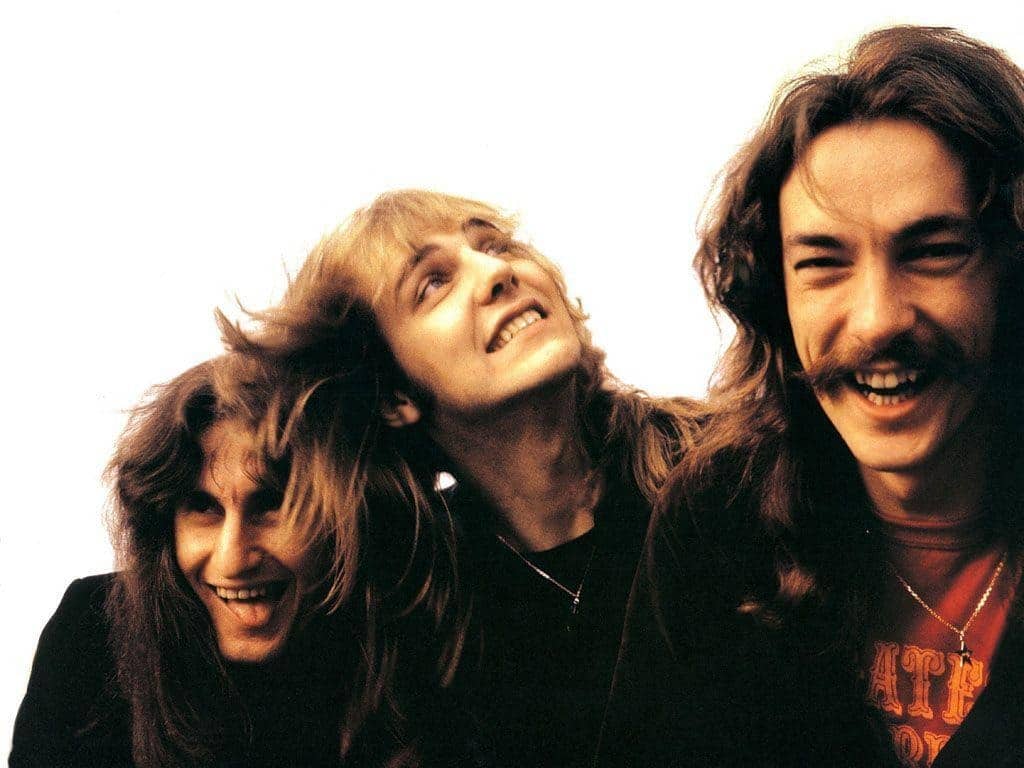
Rush was a Canadian rock band that achieved significant success and acclaim for their unique blend of progressive rock, hard rock, and heavy metal.
Rush was known for its intricate musical compositions, complex time signatures, and thought-provoking lyrics. The band’s musical style evolved over the years, starting with a more hard rock sound in the early 1970s and gradually incorporating progressive and synthesizer elements.
Some of Rush’s notable albums include “2112,” “A Farewell to Kings,” “Moving Pictures,” and “Signals.” The band gained a devoted fanbase and was admired for its musicianship, especially the virtuosity of each member. Neil Peart, in particular, was celebrated for his exceptional drumming skills and profound lyricism.
Rush’s discography includes a wide range of musical themes, from science fiction and philosophy to social commentary. Their live performances were renowned for their energy and precision. Despite officially disbanding in 2018 after Neil Peart’s passing, Rush’s influence on the progressive rock genre and rock music, in general, continues to endure.
1. “Tom Sawyer”
“Tom Sawyer” is one of the most iconic songs by the Canadian rock band Rush. It was released as the lead single from their eighth studio album, “Moving Pictures,” in 1981. Written by the band’s members—Geddy Lee, Alex Lifeson, and Neil Peart—the song is renowned for its complex instrumental arrangements, powerful vocals, and thought-provoking lyrics.
“Tom Sawyer” is characterized by its intricate basslines, dynamic guitar riffs, and Neil Peart’s distinctive drum patterns. The lyrics, penned by Peart, explore themes of individuality, self-reliance, and the challenges of modern life. The chorus features the famous refrain “What you say about his company is what you say about society.”
The instrumental prowess displayed in “Tom Sawyer” showcases Rush’s progressive rock roots, blending elements of hard rock and new wave. The song became a staple of the band’s live performances and remains one of their most popular and enduring tracks. Its instrumental complexity, combined with catchy hooks, contributed to its widespread acclaim and its status as a classic in the rock genre.
2. “Limelight”
“Limelight” is a song by the Canadian rock band Rush, released in 1981 as part of their eighth studio album, “Moving Pictures.” Written by the band’s members—Geddy Lee, Alex Lifeson, and Neil Peart— “Limelight” is often regarded as one of Rush’s standout tracks, known for its introspective lyrics and dynamic musical composition.
The lyrics of “Limelight” reflect Neil Peart’s contemplation on the challenges of fame and the impact of being in the public eye. The term “limelight” is often used metaphorically to describe the spotlight and attention that come with success.
Musically, “Limelight” features Geddy Lee’s distinct basslines, Alex Lifeson’s melodic guitar work, and Neil Peart’s intricate drumming. The song has a dynamic structure, transitioning between subdued verses and powerful, anthemic choruses. The instrumental prowess and thoughtful lyrics contribute to the enduring popularity and critical acclaim of “Limelight.”
As one of Rush’s signature songs, “Limelight” has become a fan favorite and is often performed in their live shows. Its enduring appeal lies in its combination of thoughtful lyrics, complex instrumentation, and the band’s ability to convey a deep emotional resonance.
3. “The Spirit of Radio”
“The Spirit of Radio” is a song by the Canadian rock band Rush. It was released in 1980 as the lead single from their album “Permanent Waves.” The song is known for its energetic and intricate musical arrangement and is considered one of Rush’s signature tracks.
“The Spirit of Radio” showcases Rush’s progressive rock and hard rock influences, featuring complex guitar work by Alex Lifeson, intricate drumming by Neil Peart, and the distinctive vocals of Geddy Lee. The lyrics of the song were written by Neil Peart and touch upon themes of radio broadcasting, the impact of the medium, and the challenges of maintaining artistic integrity in the music industry.
The song’s title is a nod to the radio station CFNY-FM, known for its progressive rock format, which played a crucial role in supporting and promoting Rush’s music in their early years.
“The Spirit of Radio” received positive critical acclaim and became a commercial success for Rush. The track is often regarded as one of their most iconic and enduring songs, and its influence extends beyond the world of progressive rock. It remains a staple in their live performances and is celebrated for its musical complexity and thought-provoking lyrics.
4. “YYZ”
“YYZ” is an instrumental track by the Canadian rock band Rush. The song was released on their 1981 album “Moving Pictures.” Composed by the members of Rush—Geddy Lee, Alex Lifeson, and Neil Peart—the instrumental piece showcases the band’s exceptional musical prowess and precision.
The title, “YYZ,” represents the identification code for Toronto Pearson International Airport, which is located in Toronto, Ontario, Canada. The Morse code for “YYZ” is used as the rhythmic motif throughout the song. This motif is tapped out in the introduction and serves as a musical signature for the track.
“YYZ” is recognized for its complex time signatures, intricate instrumental arrangements, and the technical proficiency of each band member. The song has become a fan favorite and a standout piece in Rush’s extensive catalog. Its inclusion on “Moving Pictures” contributed to the album’s critical and commercial success.
Given its challenging musical elements, “YYZ” is often appreciated by musicians and fans alike for its technical complexity and the band’s ability to seamlessly blend progressive rock with elements of fusion and jazz. The instrumental piece remains a testament to Rush’s musical innovation and virtuosity.
5. “Closer to the Heart”
“Closer to the Heart” is a song by the Canadian rock band Rush, released in 1977 as part of their fifth studio album, “A Farewell to Kings.” Written by the band’s members—Geddy Lee, Alex Lifeson, and Neil Peart—the song is notable for its acoustic sound, thoughtful lyrics, and melodic qualities.
The lyrics of “Closer to the Heart” were co-written by Neil Peart and Peter Talbot. The song explores themes of individuality, freedom, and the pursuit of one’s dreams. The chorus emphasizes the idea of living “closer to the heart” as a way of embracing authenticity and genuine experiences.
Musically, “Closer to the Heart” features acoustic guitar work by Alex Lifeson and Geddy Lee’s vocals accompanied by synthesizers. The song is often celebrated for its accessible and catchy nature, offering a more radio-friendly sound compared to some of Rush’s more complex and progressive compositions.
Over the years, “Closer to the Heart” has become one of Rush’s most beloved and enduring tracks. Its acoustic charm and positive lyrical message have contributed to its popularity, and the song remains a staple in the band’s live performances.
6. “Red Barchetta”
“Red Barchetta” is a song by the Canadian rock band Rush, released on their 1981 album “Moving Pictures.” The song was written by the band’s lyricist and drummer, Neil Peart, and it tells a futuristic and dystopian story about a young man taking a “joyride” in a red Barchetta, a high-performance sports car.
The narrative unfolds in a future where motorized vehicles are prohibited, and the authorities attempt to restrict personal freedom. The protagonist, guided by his uncle, drives the red Barchetta in defiance of the oppressive regulations. The song captures the thrill and exhilaration of the forbidden drive through its dynamic musical composition.
Musically, “Red Barchetta” features Geddy Lee’s distinctive vocals, Alex Lifeson’s intricate guitar work, and Neil Peart’s intricate drumming. The song is known for its shifting time signatures and dynamic shifts, showcasing Rush’s progressive rock influences.
“Red Barchetta” has become a fan favorite and is often cited as one of Rush’s standout tracks. Its combination of a compelling narrative with complex musical elements makes it a notable piece in the band’s extensive catalog. The song’s enduring popularity is a testament to Rush’s ability to create immersive and thought-provoking music.
7. “2112: Overture / The Temples of Syrinx”
“2112: Overture / The Temples of Syrinx” is a multi-part suite and the title track of Rush’s fourth studio album, “2112,” released in 1976. Written by the band’s members—Geddy Lee, Alex Lifeson, and Neil Peart—the suite is a progressive rock epic that tells a dystopian science fiction story.
The “2112: Overture” kicks off the suite with a powerful instrumental introduction featuring dynamic guitar work, synthesizers, and intricate drumming. The overture sets the stage for the narrative that unfolds in the subsequent sections.
“The Temples of Syrinx” follows the overture and introduces the story’s central theme. The Temples of Syrinx are depicted as oppressive rulers who control and suppress individual creativity and expression. The lyrics criticize authoritarianism and celebrate the power of individual thought and artistic freedom.
Musically, the suite is a showcase of Rush’s progressive rock style, featuring complex arrangements, shifting time signatures, and impressive instrumental performances. The “2112” suite is divided into multiple parts, creating a continuous and immersive listening experience.
“2112: Overture / The Temples of Syrinx” became a signature piece for Rush and is considered one of their defining works. The album “2112” marked a pivotal moment in the band’s career, solidifying their place in the progressive rock genre and gaining a dedicated fanbase.
8. “Subdivisions”
“Subdivisions” is a song by the Canadian rock band Rush, released on their 1982 album “Signals.” Written by Neil Peart, the band’s drummer and lyricist, the song explores themes of suburban life, conformity, and the struggle for individuality.
“Subdivisions” paints a picture of the challenges faced by individuals growing up in a world of uniformity, where societal expectations and conformity can stifle personal expression. The lyrics delve into the idea of subdivisions, which symbolize both physical neighborhoods and the metaphorical divisions within society.
Musically, “Subdivisions” features Geddy Lee’s emotive vocals, Alex Lifeson’s guitar work, and Neil Peart’s intricate drumming. The synthesizer plays a prominent role in the song, contributing to its atmospheric and progressive rock sound.
The song has resonated with listeners for its relatable themes and remains one of Rush’s well-loved tracks. “Subdivisions” has been praised for its thoughtful lyrics and musical complexity, showcasing the band’s ability to address societal issues through their unique blend of progressive rock and thoughtful storytelling.
9. “The Trees”
“The Trees” is a song by Rush, released on their sixth studio album, “Hemispheres,” in 1978. Written by the band’s members—Geddy Lee, Alex Lifeson, and Neil Peart—the song explores social and political themes using allegorical storytelling.
“The Trees” presents a narrative in which different types of trees (maples and oaks) are used as metaphors for social classes. The maples, portrayed as the smaller and more common trees, become discontented with their perceived inequality compared to the taller oaks. The song uses this allegory to comment on societal conflicts, injustice, and the consequences of attempting to impose equality.
Musically, “The Trees” is characterized by its intricate instrumentation, including Geddy Lee’s distinct vocals, Alex Lifeson’s guitar work, and Neil Peart’s intricate drumming. The song features dynamic shifts in tempo and mood, reflecting the complexities of the lyrical narrative.
“The Trees” is often cited as one of Rush’s most thought-provoking compositions, blending progressive rock elements with intricate storytelling. Its allegorical nature has sparked discussions and interpretations among fans over the years, contributing to the enduring appeal of the song within Rush’s extensive catalog.
10. “Freewill”
“Freewill” is a song by the Canadian rock band Rush, released on their 1980 album “Permanent Waves.” The song was written by the band’s lyricist and drummer, Neil Peart, and it explores philosophical and existential themes, particularly the concept of free will.
The lyrics of “Freewill” touch upon the tension between fate and individual agency, questioning the idea of whether human actions are predestined or if individuals have the freedom to make their own choices. The song encourages listeners to embrace personal responsibility for their decisions and actions.
Musically, “Freewill” features the distinctive vocals of Geddy Lee, Alex Lifeson’s guitar work, and Neil Peart’s intricate drumming. The song’s dynamic shifts and thoughtful instrumentation contribute to its progressive rock sound.
“Freewill” has become one of Rush’s signature songs and is appreciated for its philosophical depth, as well as its musical complexity. The combination of thought-provoking lyrics and skilled musicianship has made the song a standout in Rush’s extensive discography, resonating with fans for its exploration of timeless themes.

Edward Tomlin is a frequent contributor to Singers Room. Since 2005, Singersroom has been the voice of R&B around the world. Connect with us via social media below.









