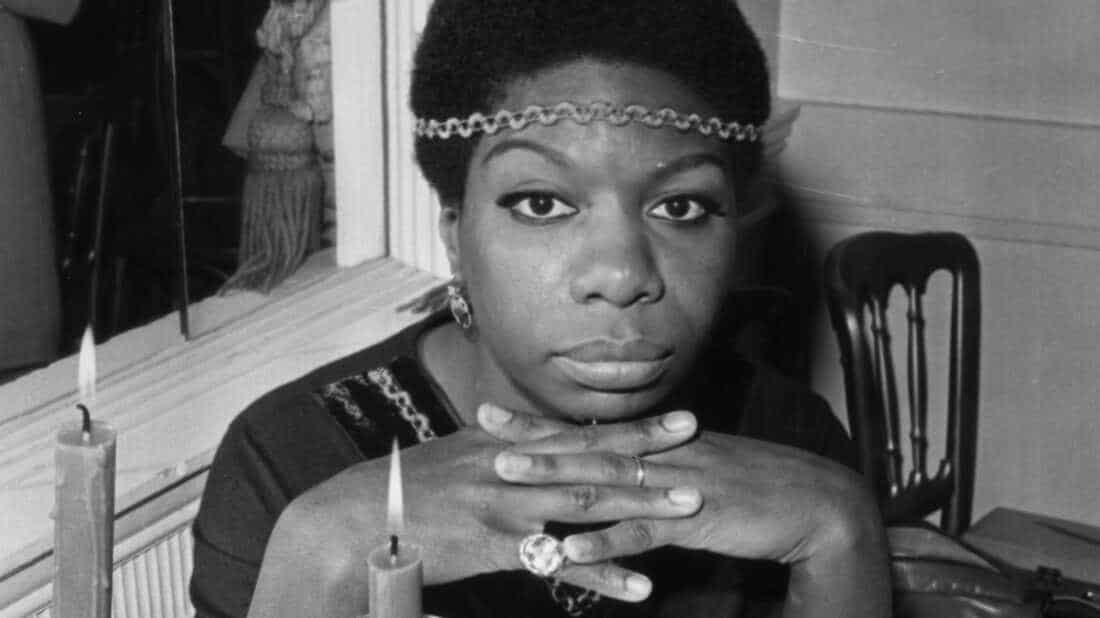
Nina Simone (1933–2003) was an iconic American singer, pianist, and civil rights activist whose multifaceted talent transcended genre boundaries. Born Eunice Kathleen Waymon, Simone’s music journey began with classical piano training, but her unparalleled ability to blend jazz, blues, folk, and gospel soon set her apart. Her distinctive voice, marked by deep, soulful tones, and her virtuoso piano skills became the hallmarks of her musical legacy.
Simone’s catalog includes masterpieces like “Feeling Good,” “I Put a Spell on You,” and “Sinnerman.” She was not just a singer but a storyteller, infusing her songs with raw emotion and a keen sense of social consciousness. Beyond her musical prowess, Simone actively engaged in the civil rights movement, using her platform to advocate for racial equality and justice.
Her impact extends far beyond her time, as her songs continue to resonate with audiences, and her influence is evident in the works of countless contemporary artists. Nina Simone’s artistry is a testament to the transformative power of music, making her a revered figure in the realms of jazz, blues, and activism, leaving an indelible mark on the cultural and social landscape.
1. “Feeling Good”
“Feeling Good” is a classic song famously covered by Nina Simone, first released on her 1965 album “I Put a Spell on You.” Written by Anthony Newley and Leslie Bricusse, the song has become one of Simone’s most iconic and enduring performances.
Simone’s rendition of “Feeling Good” is characterized by her powerful and soulful delivery. The song exudes optimism and empowerment, with lyrics that express a sense of renewal and freedom. The opening lines, “Birds flying high, you know how I feel / Sun in the sky, you know how I feel,” set the tone for a celebratory and uplifting anthem.
The arrangement, featuring a grand orchestral backdrop, complements Simone’s commanding vocals. Her ability to infuse the song with emotion and intensity has made this version of “Feeling Good” a timeless classic.
Over the years, “Feeling Good” has been covered by numerous artists, but Nina Simone’s rendition remains the definitive interpretation. The song has found its way into various forms of media, including films, commercials, and television shows, solidifying its status as a cultural touchstone and a testament to Nina Simone’s enduring influence in the world of music.
2. “I Put a Spell on You”
“I Put a Spell on You” by Nina Simone. This classic blues and jazz standard was originally written and recorded by Screamin’ Jay Hawkins in 1956, but Nina Simone’s rendition, released in 1965 on her album “I Put a Spell on You,” is widely celebrated.
Nina Simone’s version of “I Put a Spell on You” is characterized by her powerful and soulful vocals, as well as her unique interpretation of the song. She infuses the track with a sense of deep emotion, transforming it into a haunting and seductive piece.
The song has been covered by numerous artists over the years, but Nina Simone’s rendition is particularly memorable for its dramatic delivery and the way she adds her own soulful touch to the classic. “I Put a Spell on You” remains one of Nina Simone’s iconic performances, showcasing her ability to bring depth and emotion to her interpretations of songs.
3. “My Baby Just Cares for Me”
“My Baby Just Cares for Me” is a jazz standard written by Walter Donaldson and Gus Kahn. The song was first recorded by Eddie Cantor for the musical comedy “Whoopee!” in 1930. However, it gained widespread popularity and recognition through Nina Simone’s rendition, released on her debut album, “Little Girl Blue,” in 1958.
Nina Simone’s version of “My Baby Just Cares for Me” is characterized by her soulful and expressive vocals, accompanied by lush piano arrangements. The song exudes a playful and jazzy charm, with Simone’s vocal delivery capturing the joy and affection described in the lyrics.
While the song did not achieve significant success upon its initial release, it gained a new life and widespread acclaim in the 1980s when it was featured in a Chanel No. 5 perfume commercial. The exposure led to a resurgence of interest in Nina Simone’s work, and the song became one of her signature pieces.
“My Baby Just Cares for Me” has since become a jazz standard and is recognized as one of Nina Simone’s most iconic recordings. It continues to be celebrated for its timeless appeal and Simone’s masterful interpretation.
4. “Sinnerman”
“Sinnerman” is a traditional African American spiritual song that gained widespread recognition through Nina Simone’s powerful and influential interpretation. Simone recorded the song for her 1965 album “Pastel Blues,” and her version has become iconic for its intensity, blending elements of gospel, jazz, and blues.
The song’s lyrics address themes of repentance, salvation, and the urgency of confronting one’s own sins. The repetitive and escalating structure of “Sinnerman” builds a sense of tension, reflecting the internal struggle and spiritual journey depicted in the narrative. Simone’s commanding vocals, accompanied by her virtuosic piano playing, contribute to the song’s dynamic and cathartic impact.
Simone’s rendition of “Sinnerman” has transcended its gospel roots, gaining recognition for its cultural significance and its ability to evoke deep emotions. The song’s versatility has led to its inclusion in various films, TV shows, and commercials, further cementing its status as a timeless piece of music.
“Sinnerman” stands as a testament to Nina Simone’s ability to infuse traditional material with her unique style, creating a visceral and enduring musical experience that continues to captivate audiences across generations.
5. “Don’t Let Me Be Misunderstood”
“Don’t Let Me Be Misunderstood” is a classic song that Nina Simone famously covered, bringing her distinctive voice and emotional depth to the track. Originally written by Bennie Benjamin, Gloria Caldwell, and Sol Marcus, the song was first recorded by jazz singer/pianist Nina Simone in 1964 for her album “Broadway-Blues-Ballads.”
Simone’s rendition of “Don’t Let Me Be Misunderstood” is characterized by her soulful and passionate delivery. The lyrics convey a plea for understanding, expressing the fear of being misunderstood in relationships. The emotional intensity of Simone’s performance, coupled with the song’s bluesy and jazzy arrangement, adds a layer of complexity to the message.
The song has since been covered by various artists, but Nina Simone’s version remains one of the most iconic and enduring. The track has been featured in numerous films, TV shows, and commercials, attesting to its timeless appeal and cultural impact.
Simone’s ability to infuse raw emotion into her interpretations, coupled with her distinct musical style, transforms “Don’t Let Me Be Misunderstood” into a poignant and memorable piece, showcasing her influence in the realms of jazz, blues, and soul.
6. “To Be Young, Gifted and Black”
“To Be Young, Gifted and Black” is a song written by Nina Simone, along with Weldon Irvine. The song was inspired by the play of the same name by Lorraine Hansberry, the acclaimed playwright of “A Raisin in the Sun.” Nina Simone released the song as the title track of her 1970 album.
The lyrics of “To Be Young, Gifted and Black” celebrate African American pride and emphasize the importance of embracing one’s identity and potential. The phrase “young, gifted, and black” became a powerful slogan for the civil rights and black pride movements of the 1960s and 1970s.
Nina Simone’s rendition of the song is characterized by her soulful and emotive vocals, as well as the expressive piano accompaniment. The song has a gospel-infused quality, reflecting Simone’s ability to blend various musical influences.
“To Be Young, Gifted and Black” has become an anthem for empowerment and social justice, resonating with audiences for its uplifting message and Simone’s powerful delivery. The song remains a significant and influential piece in the context of both music and the broader cultural and social movements of its time.
7. “Mississippi Goddam”
“Mississippi Goddam” is a powerful and politically charged song written and performed by Nina Simone. Released in 1964 during the heart of the Civil Rights Movement, the song serves as both a protest against racial injustice and a call to action. Simone wrote the song in response to the 1963 assassination of civil rights activist Medgar Evers and the bombing of the 16th Street Baptist Church in Birmingham, Alabama, where four African American girls lost their lives.
The title “Mississippi Goddam” reflects the frustration and anger Simone felt towards the racial violence and discrimination prevalent in the Southern United States. The lyrics are a direct and unapologetic critique of the racial inequality and violence that African Americans faced during that time.
Simone’s impassioned vocal delivery, accompanied by her piano playing, amplifies the urgency and emotional weight of the song. “Mississippi Goddam” became an anthem for the Civil Rights Movement, capturing the spirit of resistance and the demand for justice.
The song remains a powerful testament to Nina Simone’s role not only as a gifted musician but also as a fearless voice for social change. Its enduring relevance is a testament to Simone’s ability to use her art as a tool for activism and advocacy.
8. “Ain’t Got No, I Got Life”
“Ain’t Got No, I Got Life” is a medley of two songs originally from the musical “Hair,” written by James Rado, Gerome Ragni, and Galt MacDermot. Nina Simone recorded her own version of the medley for her 1968 album “Nina Simone ’69 Live at the Westbury Music Fair.”
The first part of the medley, “Ain’t Got No,” lists various negative experiences and lacks, reflecting on the struggles and challenges in life. Conversely, the second part, “I Got Life,” is a more uplifting and affirming section that focuses on the positive aspects of life and the singer’s sense of self-worth.
Nina Simone’s rendition of this medley is characterized by her distinctive vocal style and her ability to convey a wide range of emotions within the same piece. The combination of the soulful and introspective “Ain’t Got No” with the upbeat and affirmative “I Got Life” showcases Simone’s versatility as an artist.
The song became one of Nina Simone’s signature performances and is celebrated for its powerful and emotionally charged delivery. It captures the essence of her ability to infuse songs with personal and social significance, making it a standout track in her repertoire.
9. “I Want a Little Sugar in My Bowl”
“I Want a Little Sugar in My Bowl” is a blues song written by Nina Simone, along with Leonard and Clarence Muse. Nina Simone first recorded the song for her 1967 album “Nina Simone Sings the Blues.” The song has since become one of her notable and enduring performances.
“I Want a Little Sugar in My Bowl” is characterized by its sultry and sensuous lyrics, expressing a desire for intimacy and romance. The metaphor of wanting “a little sugar” is a euphemism for seeking affection and physical closeness. Simone’s vocal delivery adds a layer of passion and yearning to the song.
Simone’s version of the song showcases her ability to infuse jazz, blues, and soul influences into her music. Her distinctive voice, combined with the bluesy arrangements, creates a captivating and emotive atmosphere.
Over the years, “I Want a Little Sugar in My Bowl” has been covered by various artists, but Nina Simone’s rendition remains a definitive interpretation. The song’s combination of evocative lyrics, expressive delivery, and musical craftsmanship contributes to its enduring popularity within the blues and jazz genres.
10. “Wild Is the Wind”
“Wild Is the Wind” is a classic song covered by Nina Simone, originally written by Dimitri Tiomkin and Ned Washington for the 1957 film of the same name. Nina Simone’s rendition, released on her 1966 album of the same title, stands out for its emotional depth and her soulful interpretation.
Simone’s version of “Wild Is the Wind” is characterized by her distinctive voice, known for its ability to convey a wide range of emotions. The lyrics explore the theme of passionate and unpredictable love, drawing parallels between the intensity of the wind and the unpredictability of romantic feelings.
The arrangement features a lush orchestral backdrop that complements Simone’s vocals, creating a cinematic and dramatic atmosphere. The song showcases Simone’s mastery in interpreting songs, infusing them with her unique style and adding layers of complexity to the original composition.
“Wild Is the Wind” has been praised for its evocative power and Nina Simone’s ability to connect with the emotional core of the song. The track has endured as one of Simone’s signature performances, showcasing her talent for transforming a song into a deeply personal and moving experience.

Edward Tomlin is a frequent contributor to Singers Room. Since 2005, Singersroom has been the voice of R&B around the world. Connect with us via social media below.









