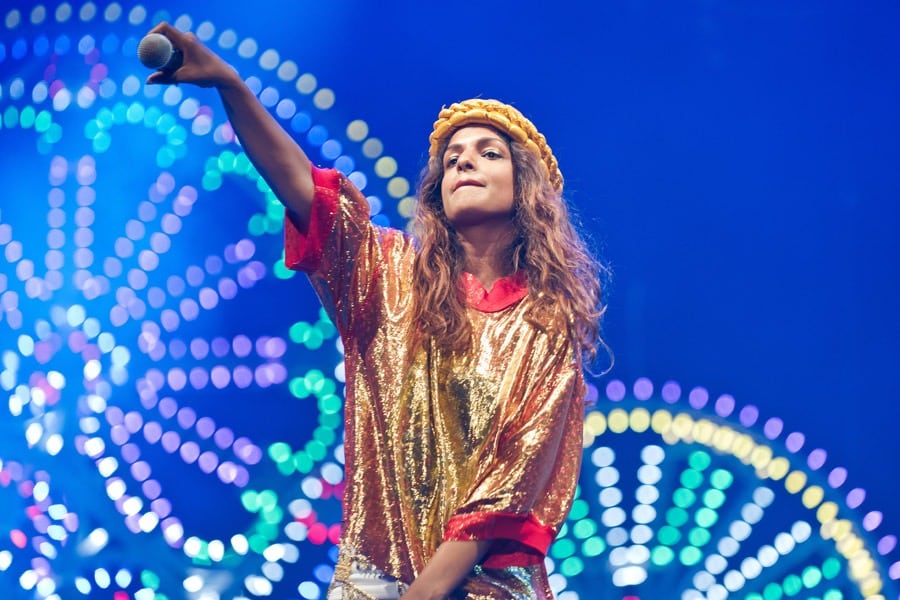
M.I.A. is a British-Sri Lankan artist who has been making music for over two decades. With her unique blend of genres, including hip-hop, electronic, and world music, M.I.A. has become a force to be reckoned with in the music industry. Throughout her career, she has used her music to highlight issues such as immigration, government corruption, and social inequality, earning her a reputation as a politically charged and outspoken artist. In this article, we will be exploring the top 10 best M.I.A. songs of all time. From her breakout hits to her most recent releases, we will examine the tracks that have cemented M.I.A.’s status as a genre-bending artist and a voice for social justice. Each of these songs showcases M.I.A.’s unique style, powerful vocals, and thought-provoking lyrics. So, sit back, turn up the volume, and get ready to dive into the best of M.I.A.’s discography.
10. “Pull Up The People”
“Pull Up The People” by M.I.A. is an energetic and politically charged track from her debut album “Arular”. The song features M.I.A.’s signature blend of hip-hop, electronic and world music elements with lyrics that criticize the corruption of governments and call for the empowerment of the people. The track is driven by a powerful bassline and a reggae-inspired beat, with M.I.A.’s dynamic vocals delivering lines like “Pull up the people, pull up the poor” and “Run your city, run your town, revolution time now”.
9. “Teqkilla”
“Teqkilla” by M.I.A. is a playful and upbeat song from her third album “Maya”. The track features a catchy synth hook and a lively dance beat, with M.I.A.’s unique vocal style adding to the fun and playful vibe. The song’s lyrics reference tequila and partying, but also touch on M.I.A.’s experiences as an immigrant and her critiques of global politics and corporations. The track is a celebration of individuality and a call to unite in resistance against systemic oppression.
8. “Bamboo Banga”
“Bamboo Banga” by M.I.A. is a vibrant and eclectic track from her second album “Kala”. The song features a mix of Indian and African rhythms, with M.I.A.’s fast-paced rapping and vocal samples creating a sense of urgency and excitement. The track’s lyrics reference cultural displacement and the challenges faced by immigrants, with M.I.A. calling for unity and strength in the face of adversity. The song’s memorable hook and energetic beat make it a standout track on the album.
7. “Born Free”
“Born Free” by M.I.A. is a powerful and provocative track from her third album “Maya”. The song features a heavy rock sound with distorted guitars and aggressive drums, creating a sense of chaos and rebellion. The song’s lyrics address themes of political oppression, violence and discrimination, with M.I.A. using provocative imagery and language to draw attention to these issues. The track’s music video, which features graphic violence and nudity, caused controversy upon its release but also helped to raise awareness about the plight of marginalized communities.
6. “Bring The Noize”
“Bring The Noize” by M.I.A. is an explosive and high-energy track from her fourth album “Matangi”. The song features a pounding beat and heavy bassline, with M.I.A.’s rapid-fire rapping and vocal samples adding to the frenetic energy of the track. The song’s lyrics reference M.I.A.’s experiences as a refugee and her struggles with censorship, as well as her critiques of politics and the music industry. The track’s catchy hook and dynamic sound make it a standout track on the album and a favorite among M.I.A.’s fans.
5. “Matangi”
“Matangi” is the title track from M.I.A.’s fourth album, named after the Hindu goddess of music and speech. The song features a blend of electronic and Indian classical music elements, with M.I.A.’s rapid-fire rapping and vocal samples adding to the track’s energy and intensity. The song’s lyrics reference M.I.A.’s identity as a Tamil woman and her struggles with censorship, as well as her critiques of the music industry and consumer culture. The track’s dynamic sound and bold lyrics make it a standout on the album.
4. “Bucky Done Gun”
“Bucky Done Gun” is a high-energy track from M.I.A.’s debut album “Arular”. The song features a mix of dancehall and hip-hop beats, with M.I.A.’s rapid-fire rapping and vocal samples adding to the track’s frenetic energy. The song’s lyrics reference gun violence and political oppression, with M.I.A. using her unique style to draw attention to these issues. The track’s infectious beat and catchy hook make it a fan favorite and a standout track on the album.
3. “Paper Planes”
“Paper Planes” is perhaps M.I.A.’s most well-known song, thanks in part to its appearance in the film “Slumdog Millionaire”. The song features a sample from The Clash’s “Straight to Hell” and a catchy, reggae-inspired beat. The song’s lyrics reference immigration, poverty, and the criminalization of people of color, with M.I.A. using her unique style to bring attention to these issues. The track’s memorable hook and infectious sound helped to cement M.I.A.’s status as a genre-bending artist.
2. “Galang”
“Galang” is a breakout hit from M.I.A.’s debut album “Arular”. The song features a blend of dancehall and electronic beats, with M.I.A.’s rapid-fire rapping and vocal samples adding to the track’s high-energy vibe. The song’s lyrics reference M.I.A.’s identity as a refugee and her experiences as an immigrant, with the title “Galang” coming from a Jamaican slang word meaning “go ahead” or “do your thing”. The track’s infectious beat and M.I.A.’s unique style helped to establish her as a force to be reckoned with in the music world.
1. “Bad Girls”
“Bad Girls” is a standout track from M.I.A.’s fourth album “Matangi”. The song features a Middle Eastern-inspired beat and M.I.A.’s distinctive rapping style, with lyrics that celebrate women who break boundaries and challenge social norms. The track’s music video, which features a group of women driving through the desert in Saudi Arabia, helped to draw attention to the issues of women’s rights and driving restrictions in the country. The track’s infectious sound and empowering message make it a fan favorite and one of M.I.A.’s most popular songs.

Samuel Moore is a frequent contributor to Singers Room. Since 2005, Singersroom has been the voice of R&B around the world. Connect with us via social media below.